

 By
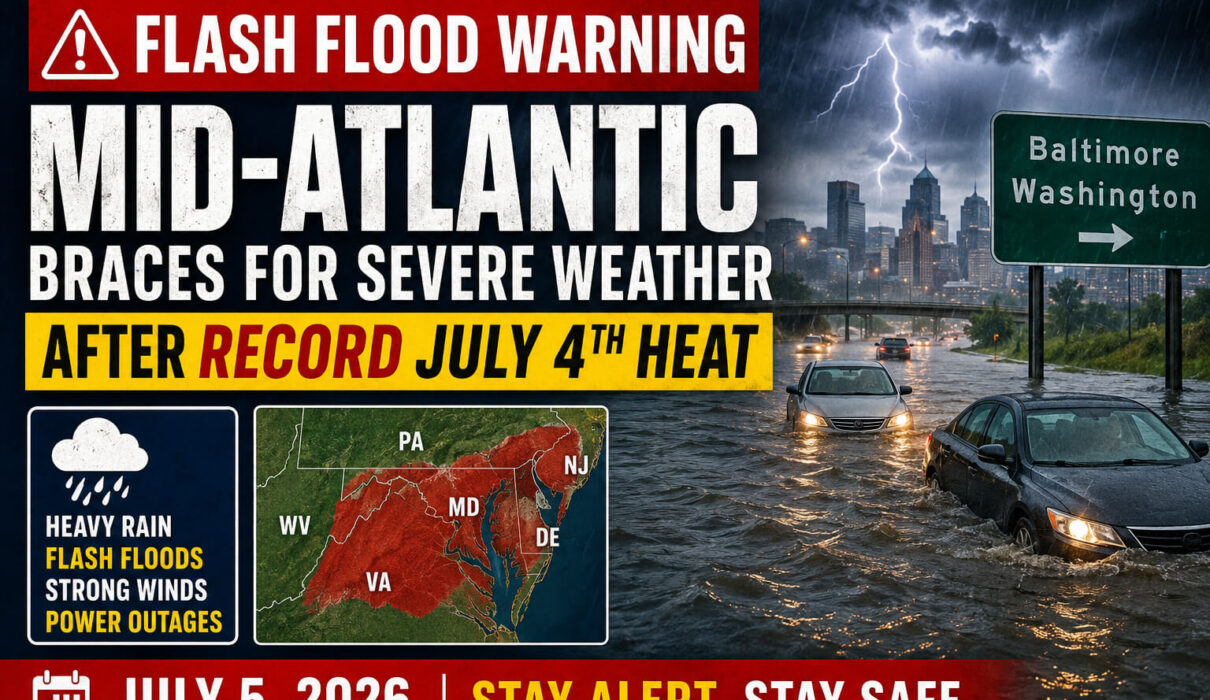
By Key Facts: A flash flood warning has been issued for parts of the Mid-Atlantic after record-breaking July 4th heat created favourable conditions for severe thunderstorms.
Forecasters warn that heavy rainfall, damaging wind gusts, and localised flooding are possible as the weather system moves across the region.
The Flash Flood Warning: Mid-Atlantic Braces for Severe Weather After Record July 4th Heat comes just a day after millions experienced unusually high temperatures during Independence Day celebrations. Meteorologists say the dramatic shift from extreme heat to powerful storms could increase the risk of flash flooding in several communities.
According to weather forecasts, a cold front is moving into the Mid-Atlantic while warm, moisture-filled air remains in place. That combination is expected to fuel slow-moving thunderstorms capable of producing intense rainfall within a short period.
Some locations could receive several inches of rain in only a few hours. Areas with poor drainage, low-lying roads, and small streams are considered especially vulnerable if storms repeatedly move over the same locations.
Officials are encouraging residents to stay alert as weather conditions may change rapidly throughout the day. Flash floods can develop with little warning, making travel dangerous even after rainfall appears to slow down.
The severe weather threat follows one of the hottest July 4th holidays in recent years for parts of the eastern United States. The extreme heat increased humidity levels, providing additional energy for thunderstorms as the cold front approached.
Meteorologists note that not every community will experience the same impacts. While some areas may only see scattered showers, others could face heavy downpours capable of flooding roads, neighbourhoods, and underpasses.
Emergency managers continue to advise people to monitor local forecasts and weather alerts. Drivers are also being reminded not to enter flooded roadways, as water depth can be difficult to judge and conditions may change within minutes.
Why It Matters
For many families, the biggest concern is public safety. Heavy rain during busy travel periods can disrupt road traffic, delay flights, and increase the likelihood of power outages if strong winds accompany the storms.
Businesses and outdoor events may also be affected if severe weather becomes widespread. Communities recovering from the recent heat could face additional challenges if flooding damages infrastructure or interrupts essential services.
Different Perspectives
Weather experts agree that flash flooding is one of the most dangerous weather hazards because it develops quickly. However, they also emphasise that the exact location of the heaviest rainfall cannot always be predicted with precision.
Local emergency officials are encouraging residents to prepare in advance rather than wait for flooding to begin. Staying informed through official weather updates remains one of the most effective ways to reduce risk.
What’s Next
Forecasters will continue monitoring rainfall totals and storm development as the weather system moves across the region. Additional Flash Flood Warnings or Severe Thunderstorm Warnings could be issued if storms become stronger or rainfall rates increase.
Conditions are expected to evolve over the next 24 to 48 hours, with the greatest impacts depending on where the heaviest storm cells develop. Residents are encouraged to check official forecasts regularly and stay alert for updated warnings.
While weather models provide guidance, the exact location of the most intense rainfall remains uncertain. As a result, communities across the Mid-Atlantic should remain prepared for rapidly changing conditions until the storm system moves out of the region.
Bottom Line: The record July 4th heat has created conditions that are now helping fuel severe thunderstorms capable of producing dangerous flash flooding across parts of the Mid-Atlantic. Staying informed, avoiding flooded roads, and following official weather alerts remain the best ways to reduce risk as the situation develops.