
 By
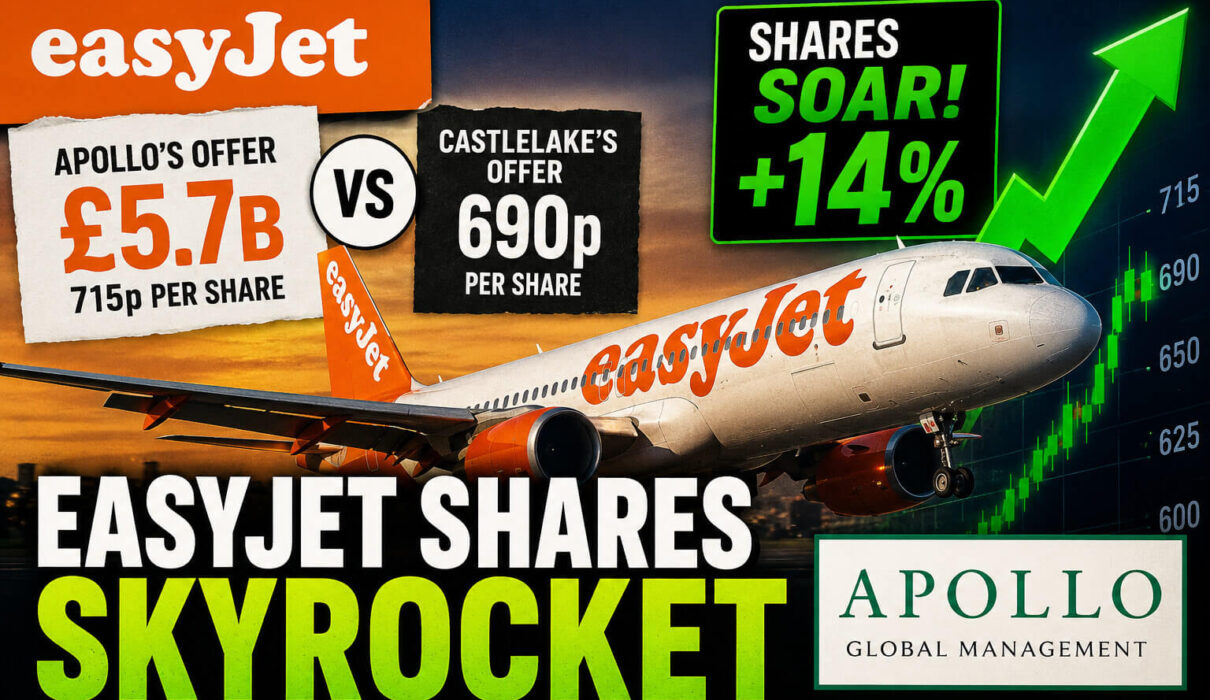
By easyJet shares jumped sharply on July 10 after the airline confirmed it had reached an agreement in principle with Apollo Global Management on a takeover proposal worth approximately £5.7 billion, or 715 pence per share. The offer overtakes Castlelake’s previous 690 pence-per-share proposal, leading easyJet’s board to state that it is now prepared to recommend Apollo’s bid if a formal offer is submitted. The announcement instantly turned what looked like a straightforward acquisition into a full-scale bidding battle for one of Europe’s biggest low-cost airlines.
For investors, the reaction was immediate. easyJet’s stock climbed around 14% during trading, reaching its highest level in more than four years as markets began pricing in the possibility of either a successful Apollo acquisition or an even higher competing bid.
Apollo’s Surprise Move Changed Everything

Only a few days earlier, Castlelake appeared to be in control of the takeover process.
After rejecting several earlier proposals, easyJet had finally agreed in principle to Castlelake’s improved offer of 690p per share, valuing the airline at roughly £5.5 billion. At the time, the board believed the revised terms represented meaningful progress after weeks of negotiations.
That changed when Apollo returned with a richer proposal worth 715p per share, placing an overall valuation of about £5.7 billion ($7.7 billion) on the company. Besides offering a higher price, Apollo also introduced a “stub equity” option, allowing eligible shareholders to keep an investment in the privately owned business after the takeover rather than cashing out completely. Analysts say this additional flexibility became one of the proposal’s biggest strengths.
Instead of waiting for another round of negotiations, easyJet’s directors moved quickly. The company announced it was no longer prepared to recommend Castlelake’s proposal and now considers Apollo’s financial terms good enough to support, provided a formal bid follows.
Why Did Investors Push the Stock Higher?
The biggest reason is simple: higher offers usually mean higher potential returns for shareholders.
Whenever two well-funded buyers compete for the same public company, investors often expect additional bids or improved financial terms. That’s exactly what happened after Apollo entered the race.
Although Apollo’s offer values easyJet at 715p per share, the market price remained below that level after the announcement. That gap reflects the fact that the acquisition is still uncertain. Investors recognize the deal could fail, but they also see a realistic chance that Castlelake responds with another improved proposal before the regulatory deadlines expire.
Another factor supporting sentiment is Apollo’s aviation experience. The investment firm has previously financed airline-related assets and infrastructure, giving investors greater confidence that it understands both operational challenges and industry regulations.
Why does easyJet prefer Apollo’s Offer?
Price is the most obvious advantage, but it isn’t the only one.
Apollo has publicly committed to supporting easyJet’s existing management team, protecting the airline’s well-known brand and continuing its long-term business strategy rather than breaking the company apart. The firm also said it intends to maintain the licensing agreement with easyGroup, the business controlled by founder Sir Stelios Haji-Ioannou.
Ownership rules were another important issue during negotiations.
European airlines must remain majority European-owned to retain their operating rights inside the European Union. Apollo says it has developed a structure that will comply with those regulations while still allowing the transaction to proceed. Regulatory certainty became a major consideration because investors had previously questioned whether any private-equity takeover could satisfy those requirements.
The Haji-Ioannou family, which owns more than 15% of easyJet, could also have significant influence over the outcome. Their position makes them one of the company’s largest shareholders, meaning any successful bidder will likely need their support.
Could Castlelake Still Fight Back?
Yes, one of the biggest reasons investors remain excited.
Castlelake has already increased its proposal multiple times during negotiations. Earlier offers of 560p, 625p, and 650p per share were rejected before the company eventually raised its bid to 690p, which easyJet accepted in principle just days ago.
Now that Apollo has raised the benchmark to 715p, Castlelake faces an important decision. It can either improve its proposal again or withdraw from the process.
Financial analysts believe another increase is possible, although the room for further bidding may be narrowing after Castlelake has already made several revisions. A prolonged bidding war could eventually reduce the financial attractiveness of the acquisition for either buyer.
What Happens Next?
Despite the market excitement, easyJet hasn’t officially been sold.
Apollo has until 7 August 2026 under UK takeover rules to announce a firm intention to make an offer or walk away. Until that happens, shareholders still face uncertainty, and there’s no guarantee the transaction will be completed.
The coming weeks will involve regulatory discussions, financing arrangements, and continued negotiations with major shareholders. Castlelake also remains free to revise its proposal before the process reaches its conclusion.
For the wider airline industry, the takeover battle highlights something much bigger than one company’s share price. Private-equity investors increasingly see established European airlines as attractive long-term investments despite recent pressure from fuel costs, geopolitical tensions and softer travel demand. Apollo’s willingness to pay an 81% premium over easyJet’s undisturbed share price reflects confidence that the airline’s long-term value is considerably higher than where the market had priced it before takeover talks began.
Whether Apollo ultimately wins or Castlelake returns with another surprise offer, one thing is already clear: easyJet has become the center of one of 2026’s most closely watched corporate takeover battles. Investors aren’t just reacting to a higher bid; they’re betting that the competition for the airline may not be over yet.