
 By
By Ever Recorded Great Content… Only to Hear a Bad Room?
I still remember the first time I upgraded from a cheap USB microphone to a decent condenser mic. I expected crisp, professional audio. Instead, I heard room echo, keyboard clicks, and random reflections bouncing around my small office.
Like many creators, podcasters, streamers, and musicians, I started looking for a quick fix. That’s when microphone isolation shields caught my attention. The ads made them look like a magic solution for bad room acoustics.
After testing several models over the years, I learned that isolation shields do help-but not always in the way most people think.
Let’s expose the truth.
Fact #1: Isolation Shields Don’t Soundproof Your Room
This is probably the biggest misconception.
Many people buy a microphone isolation shield expecting it to block outside noise such as traffic, barking dogs, air conditioners, or loud neighbors. Unfortunately, that’s not how they work.
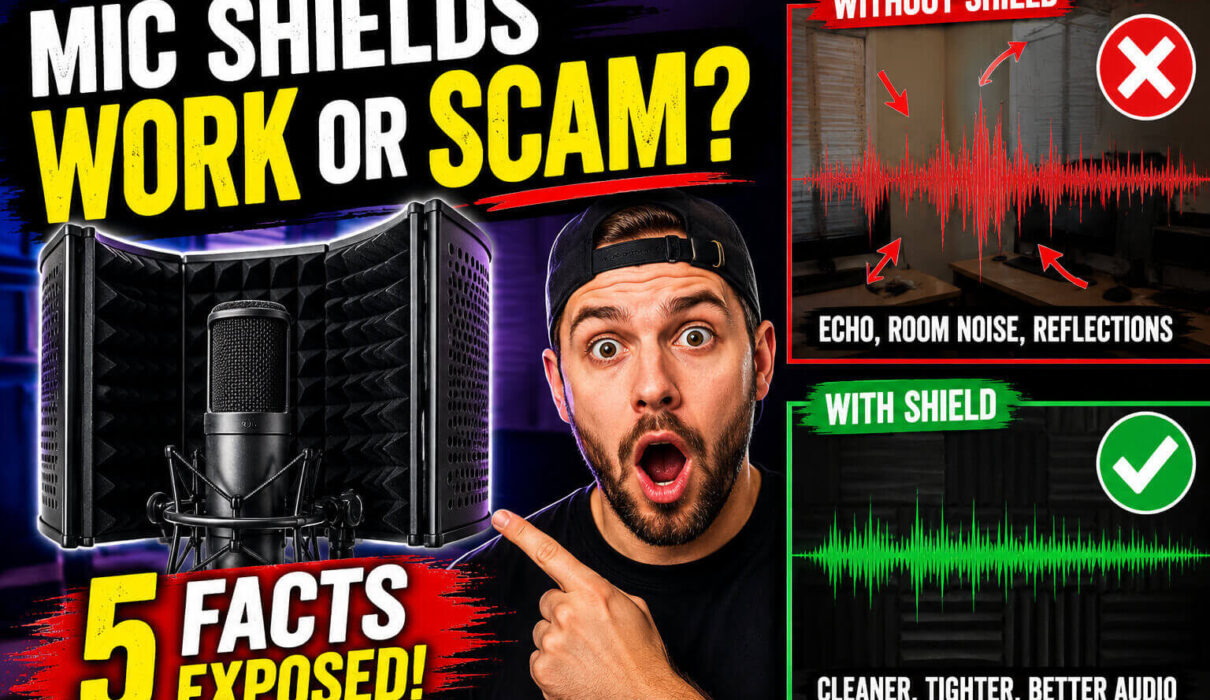
A microphone isolation shield is designed to reduce sound reflections that bounce off nearby surfaces and return to the microphone. It helps control room coloration rather than external noise.
If a truck drives past your house, your microphone will still hear it.
What you may notice is a cleaner recording with fewer reflections coming from walls behind the microphone.
Fact #2: They Work Best in Untreated Rooms
When I tested isolation shields in a professionally treated studio, the difference was relatively small.
When I moved the same setup into a spare bedroom with hard walls and minimal furniture, the improvement became much more noticeable.
That’s because untreated rooms create reflections that can make recordings sound hollow or boxy. The shield helps absorb some of those reflections before they reach the microphone capsule.
For creators recording in apartments, bedrooms, dorm rooms, or home offices, an isolation shield can be a useful tool.
Fact #3: Placement Matters More Than Most People Realize
I’ve seen countless people install an isolation shield incorrectly and then complain that it doesn’t work.
The shield should sit behind the microphone and surround the rear portion of the mic where unwanted reflections are likely to enter.
The distance between your mouth and microphone also matters. Recording closer to the microphone often improves clarity and naturally reduces room noise.
A poorly placed shield can produce disappointing results even if it’s a high-quality model.
Fact #4: They Can’t Replace Proper Acoustic Treatment
This is where marketing often gets misleading.
A microphone isolation shield can improve recordings, but it cannot replace acoustic panels, bass traps, rugs, curtains, or other room-treatment solutions.
Think of it as one piece of the puzzle rather than the entire solution.
When I combined an isolation shield with a few acoustic panels and better microphone positioning, the difference was dramatically bigger than using the shield alone.
If you’re serious about studio-quality audio, you’ll eventually want some form of room treatment.
Fact #5: Some Microphones Benefit More Than Others
Not every microphone responds the same way.
Large-diaphragm condenser microphones tend to capture more room detail and reflections. These microphones often show the biggest improvement when paired with an isolation shield.
Dynamic microphones, especially those commonly used for podcasting and streaming, naturally reject more room sound. The improvement may still be noticeable, but usually less dramatic.
That’s why one reviewer may swear by isolation shields while another claims they don’t work. Their microphones and recording environments may be completely different.
Are Microphone Isolation Shields Worth Buying?
In my experience, yes, if your expectations are realistic.
They can help reduce room reflections, tighten up recordings, and improve overall audio quality in untreated spaces. What they won’t do is magically soundproof your room or eliminate all unwanted noise.
For many home creators, they provide a relatively affordable upgrade compared to building a fully treated recording space.
My Pro-Tip
If you’re working with a limited budget, don’t spend all your money on an isolation shield alone.
Start by improving microphone placement. Record closer to the microphone. Add soft furnishings such as rugs, curtains, and bookshelves around your recording area. Then add an isolation shield as an extra layer of control.
I’ve consistently found that this combination delivers better results than relying on any single piece of gear.
Key Takeaway
So, do microphone isolation shields actually work?
Yes, they do, but they aren’t miracle devices.
They reduce unwanted reflections, improve recordings in untreated rooms, and can help creators achieve cleaner audio. The biggest mistake is expecting them to function as soundproofing equipment.
Use them as part of a smart recording setup, and you’ll likely hear a noticeable improvement in your studio audio quality.