

 By
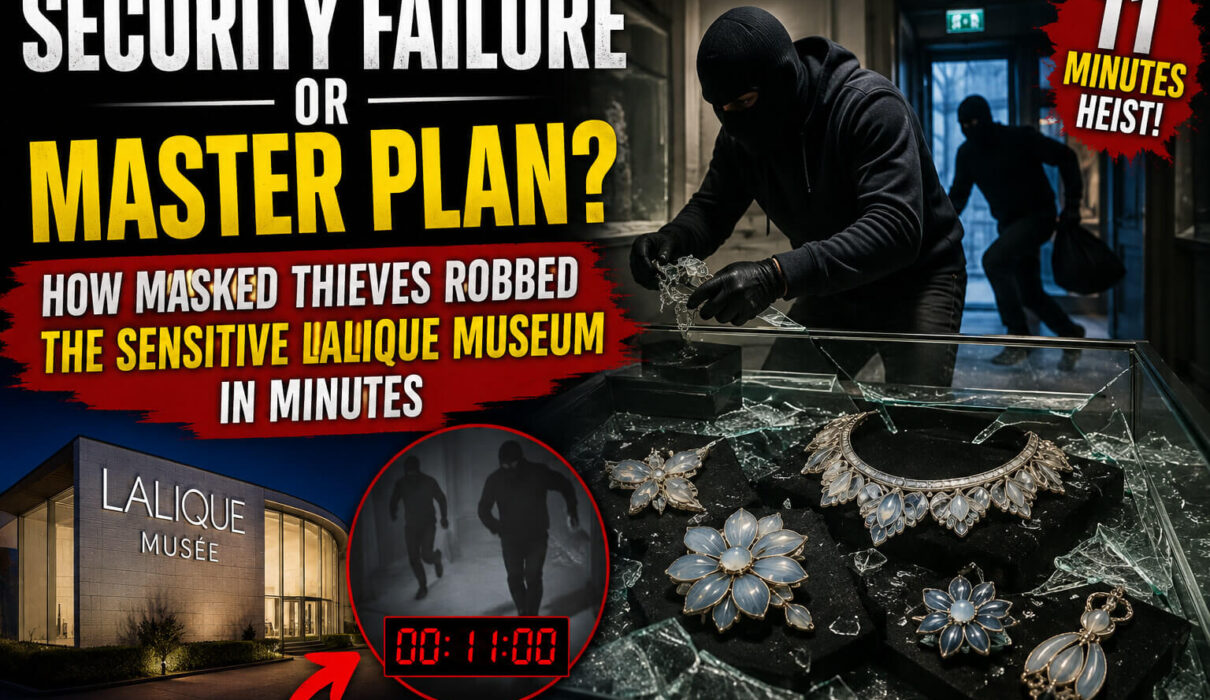
By A gang of masked thieves carried out one of France’s biggest museum robberies of 2026 after breaking into the Lalique Museum in Wingen-sur-Moder during the early hours of July 5, 2026. Investigators say the burglars stole around 20 crystal jewelry pieces worth nearly €4 million in an operation that lasted just 11 minutes, raising serious questions about museum security and whether the heist was planned long before it happened.
The Lalique Museum robbery is already being compared with recent high-profile museum thefts in France because the suspects appeared to know exactly where to go. Instead of searching the galleries, they headed straight for the jewelry collection, smashed six display cases, grabbed the valuables, and disappeared before police arrived.
What Happened During the Lalique Museum Heist?
According to investigators, the break-in began at around 5:30 a.m. local time. The masked gang forced open a door, entered the museum, and moved directly toward the gallery displaying René Lalique’s crystal jewelry.
Security cameras reportedly show the thieves completing the entire operation in about 11 minutes. Around 20 crystal jewelry pieces were stolen, with losses estimated at close to €4 million. The museum has temporarily closed while authorities assess the damage and strengthen security.
Why Are People Calling It a Security Failure?
One of the biggest questions is simple: How could thieves escape when the alarm actually worked?
Investigators say the museum’s alarm system activated as expected. The problem appears to have been the response. Reports indicate the private security company responsible for monitoring the museum did not notify police quickly enough. Instead, a cleaner arriving for work noticed something was wrong and alerted authorities before the security response was completed.
That sequence of events has triggered criticism from local officials, who believe the delay gave the burglars enough time to leave with the stolen collection.
Was This Heist Planned in Advance?
Authorities haven’t confirmed exactly how the gang prepared, but several details point toward careful planning rather than a random burglary.
Christian Dorschner, the mayor of Wingen-sur-Moder, said the suspects appeared to know where the jewelry collection was located. Investigators are reviewing CCTV footage and other evidence to determine whether the thieves conducted surveillance before the robbery or had inside knowledge of the museum’s layout.
That has fueled online debate over whether this was simply a security failure or a professionally organized museum heist.
What Was Stolen From the Lalique Museum?
The stolen collection wasn’t made of gold or large diamonds. Instead, the burglars targeted René Lalique’s crystal jewelry, famous worldwide for its artistic and historical value.
Experts say these works are difficult to sell legally because they’re instantly recognizable and carry significant cultural importance. Unlike precious metals, the crystal pieces can’t simply be melted down and resold without destroying their value.
Why This Robbery Matters
The burglary comes only months after another major museum theft in France, increasing pressure on authorities to review security at cultural institutions across the country.
Reports say the Lalique Museum had already been placed under heightened supervision following the 2025 Louvre jewel robbery. Even with additional monitoring, the thieves were still able to enter, steal millions of euros’ worth of artifacts, and escape within minutes. That has renewed concerns about whether alarm systems alone are enough without a rapid emergency response.
Is Anyone Under Arrest?
As of July 6, 2026, no arrests have been announced.
The Bas-Rhin gendarmerie is leading the investigation, while detectives continue reviewing surveillance footage and collecting forensic evidence. Museum officials have confirmed the museum will remain closed temporarily while security measures are reviewed.
The Lalique Museum heist has become one of the most talked-about crime stories in Europe because it exposed a difficult reality: even museums protected by alarms and surveillance can remain vulnerable when experienced criminals move with speed, preparation, and precise timing. Whether investigators ultimately describe it as a security failure, a master plan, or both, the case is likely to influence how museums across France protect priceless collections in the future.