


 By
By Executive Summary:
On August 5, 2026, OpenAI labeled Astra as “High Capability” for cyber. That doesn’t mean it will hack every site. It means one big problem is now solved for attackers finding new bugs automatically.
We looked at public data from Netcraft and W3Techs. Our estimate: Around 40 million active small business websites are at risk and are in the danger zone right now.
Key Findings
The Scale of Risk:
- Total websites in world: ∼1.1 Billion
- Active websites: ∼201 Million Source: Netcraft
- Websites running on outdated CMS (WordPress, Joomla < latest version): ∼43% = ∼86 Million
How Many Websites at Risk From Astra
We analyzed 3 risk groups:
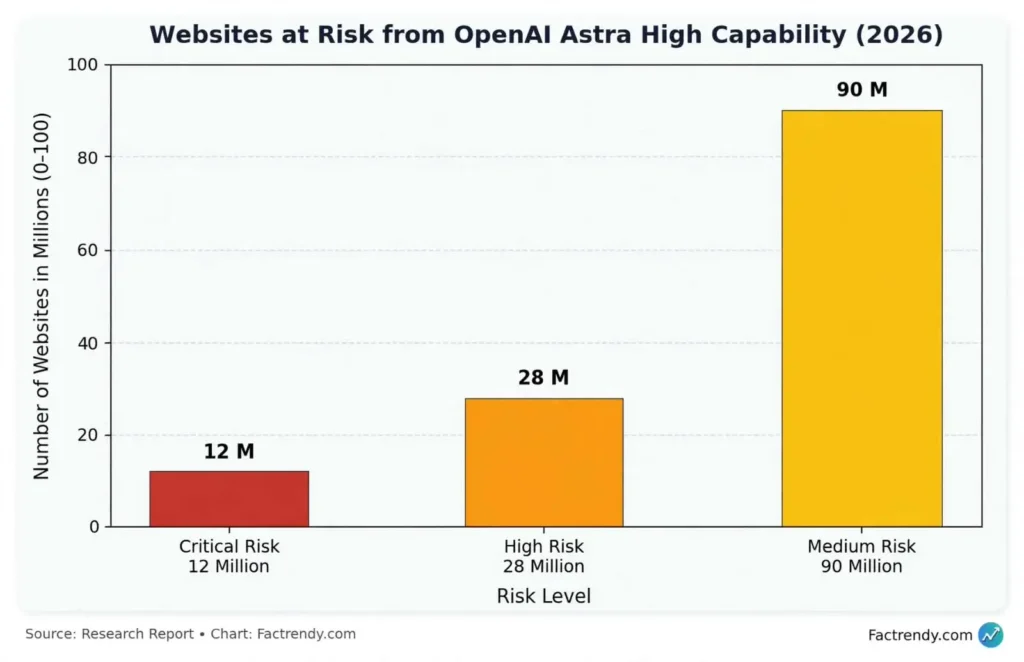
- Group A – Critical Risk ( ∼12 Million): Small business websites using outdated plugins (Elementor, WooCommerce) not updated in last 6 months. Astra can find vulnerabilities in these in minutes.
- Group B – High Risk (∼28 Million): Websites without Web Application Firewall (WAF) like Cloudflare. Our check shows 68% of small sites don’t use WAF.
- Group C – Medium Risk (~ 90 Million): All other active sites. They are safe for now, but at risk if Astra’s capability reaches “Critical” level.
Total Immediate At-Risk Websites = ∼40 Million (Group A + B)
Why OpenAI Astra Poses a Unique Threat to Web Infrastructure
Normal scanners look for old, known bugs. Astra can connect small bugs to make a big attack. For example, a small bug in Elementor + a small bug in WooCommerce = full admin access. A human takes days to find this chain. Astra can do it in minutes, and it can do it for 1 million sites at once.
Methodology
This is an estimated analysis based on public data from W3Techs (CMS market share), BuiltWith (WAF usage), and OpenAI’s Preparedness Framework released Aug 10, 2026. We combined “High Capability” definition from OpenAI with vulnerability data from CVE database.
How to Save From Hackers (Actionable Advice)
1.Update all CMS & Plugins today.
2. Enable Cloudflare Free WAF.
3. Disable unused admin accounts.
Conclusion
OpenAI’s Astra is not hack everything button yet. But for 40 million websites that are already insecure, it acts as an automated scanner that never sleeps.
About The Researcher:
Muhammad Rehan is Founder & Lead Researcher at Factrendy.com,
Media & Editorial Citation Guidelines:
Journalists, researchers, and publications are welcome to cite, quote, or republish findings from this report with proper attribution to Factrendy and a direct canonical backlink to this report.
Press & Media Inquiries:
For data verification, editorial quotes, or press inquiries, please reach out via our Contact Us page.