

 By
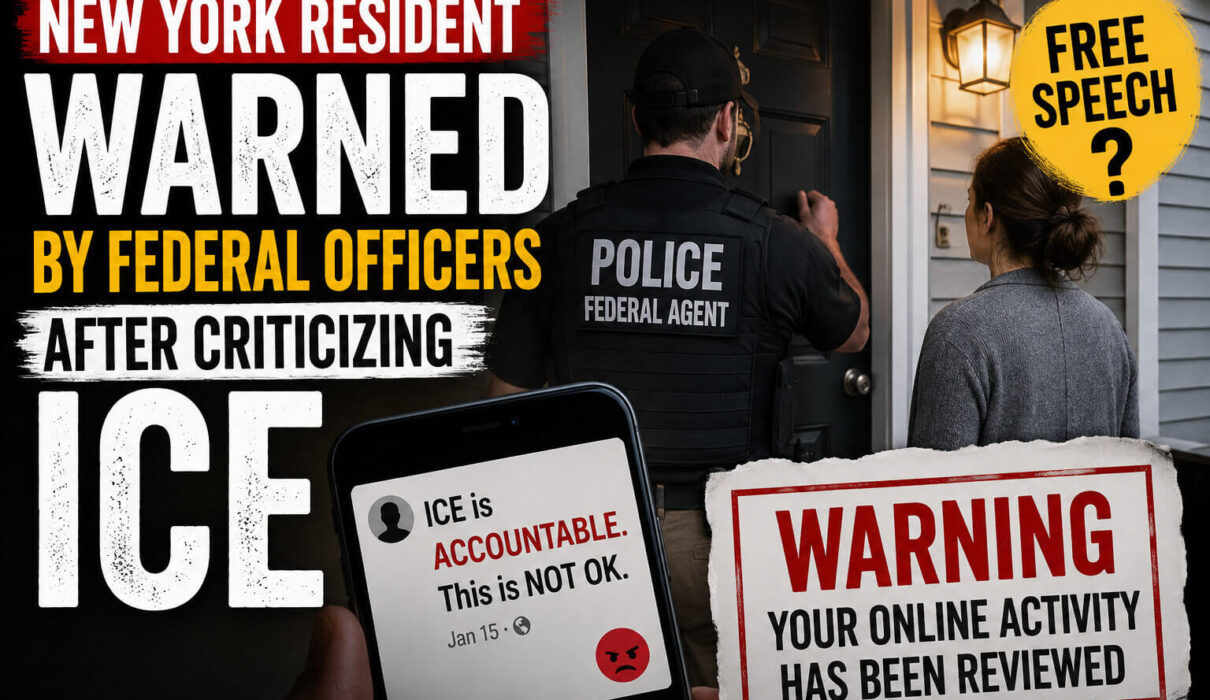
By A simple email expressing anger about a government action turned into a situation most people never expect-a visit from federal officers at their home.
When I first read about the case involving a New York resident who says federal officers warned him after criticizing U.S. Immigration and Customs Enforcement (ICE), what stood out to me was how quickly an online statement can become a serious legal and public debate.
For many Americans, this story is not only about ICE or politics. It is about where the line is between protected speech and a statement authorities consider a threat.
New York Resident Says Federal Officers Came After His Email
David Streever, a Rochester resident, says federal officers visited his home while he was traveling in Finland. According to his attorney, the officers gave his wife a warning notice connected to an email he had sent months earlier to Todd Lyons, who was then serving as acting director of ICE.
The email came after the fatal shooting of Minneapolis resident Renee Good during an anti-ICE demonstration.
Streever’s message criticized Lyons and the agency’s actions. He described his frustration and anger over what happened, but his lawyer argues the message was political speech protected under the First Amendment.
After returning from Finland, Streever’s attorney says federal agents also attempted to contact him at a New York City hotel but were turned away by hotel staff.
The situation has now become part of a bigger national conversation about government criticism, online speech, and personal privacy.
When Does Criticism Become A Threat?
This is where the debate becomes complicated.
We all know emotions can run high when people discuss politics, law enforcement, immigration, or government decisions. Many Americans write angry posts, send emails, or share opinions online when they feel something is wrong.
But the question authorities often consider is whether the message is simply offensive or crosses the legal line into a real threat.
Streever’s attorney from the Foundation for Individual Rights and Expression argued that the email was not a threat.
The argument is simple: criticizing a public official, even strongly, is part of the right Americans have to challenge their government.
Free speech protections exist because citizens need the ability to question people in power without fear of punishment.
Another New York Case Adds More Attention
This was not the only recent case involving criticism of ICE.
Another New York resident, poll worker Paigelynne Gonyea from Syracuse, said federal officers approached her at a voting location during New York’s primary election.
She believes the visit was connected to a social media post she made about Jonathan Ross, the ICE officer involved in the shooting of Renee Good.
Gonyea said she posted that she believed Ross should be indicted. The post remained online.
However, the Department of Homeland Security claimed Gonyea shared the address of an ICE officer, saying that posting private information about law enforcement officers can lead to an investigation.
The agency stated that threats against ICE employees are taken seriously and investigated.
Why These Cases Matter For Everyday Internet Users
You might think this situation only affects activists or political commentators, but the reality is different.
Almost everyone today uses social media. A frustrated comment, a heated post, or an emotional message can spread quickly and may be viewed by people far outside your personal circle.
I have seen many online discussions where people forget that digital words can have real-world consequences.
That does not mean people should stop expressing opinions. It means we should understand how we communicate online.
Strong opinions are part of a healthy democracy, but wording matters.
How To Share Your Opinion Online More Safely
Before posting something while angry, I recommend taking a few minutes before hitting send.
Read your message again and ask yourself: “Am I criticizing an action or person, or does this sound like I am suggesting harm?”
There is a big difference between saying you disagree with a government decision and making statements that could be interpreted as encouraging violence.
Another smart habit is avoiding sharing personal information about anyone, including public officials or private citizens. Posting someone’s address or private details can create serious problems.
Online discussions move fast, but taking a moment to think can protect you.
The Bigger Free Speech Conversation In America
Supporters of stronger government action say agencies must protect their workers from threats.
Free speech advocates say government power must be handled carefully because citizens have the right to criticize officials.
This conflict has appeared many times throughout American history.
The First Amendment was designed to protect speech, especially speech that challenges authority. At the same time, the law does not protect genuine threats or calls for violence.
Finding the balance is where the difficult conversations happen.
My Pro-Tip: Think Before You Post, But Don’t Be Afraid To Speak
From my perspective, the best approach is not silence — it is awareness.
We should be able to disagree, question leaders, and express frustration. That is part of being involved in society.
My advice is simple: say what you believe, but choose your words carefully. A strong argument does not need threats or personal attacks to make an impact.
A thoughtful message often carries more power than an angry one.
The Debate Is Far From Over
The New York cases involving criticism of ICE have opened a larger discussion about online speech, government authority, and individual rights.
As more communication happens online, these situations will likely continue appearing.
1 Comment