
 By
By There is a reason the US dollar feels like it “disappears” into almost every corner of the world economy.
You may not see it, but it is there in oil trades, imported goods, international loans, and even in the savings of central banks across different countries. What makes it powerful is not just the United States itself, but the way the world quietly depends on its currency without even thinking about it.
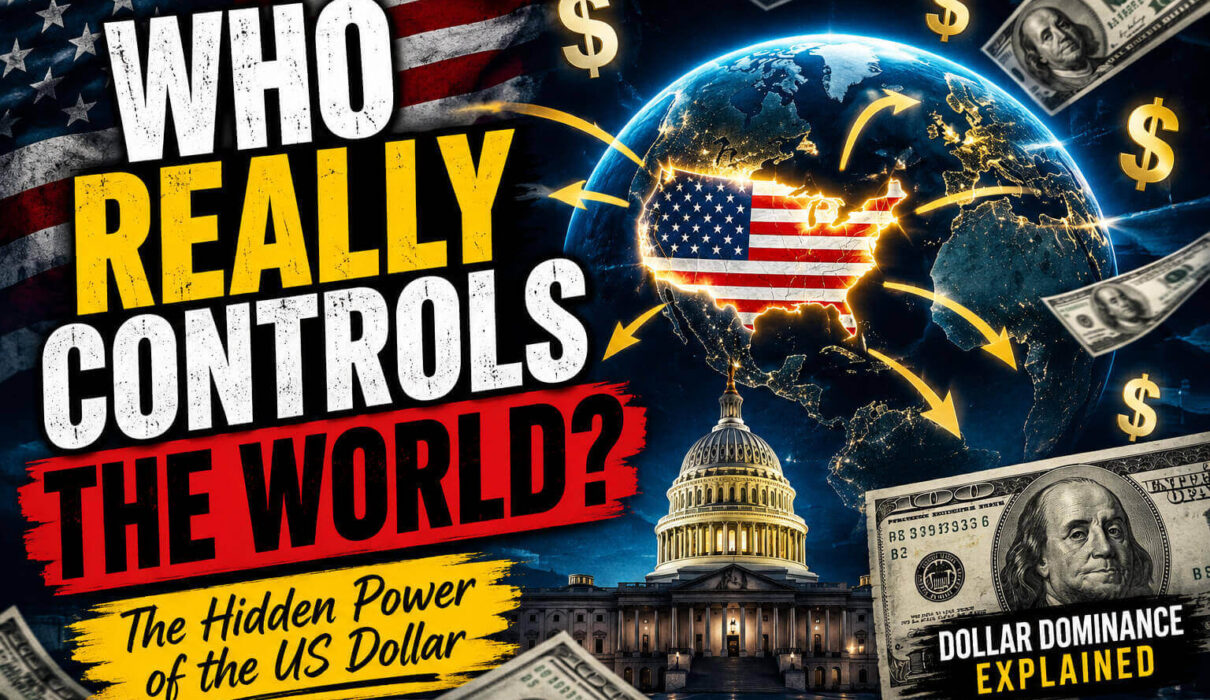
Dollar dominance refers to a situation in which one currency becomes vital on a global scale, influencing trade, politics, and financial decisions among countries. Notably, this dominance is not achieved through force; instead, it is established through trust, a strong foundation, and long-term reliance.
How the Dollar Became the World’s Financial Center
The rise of the US dollar didn’t happen overnight. After World War II, most major economies were damaged, while the United States remained financially strong. This created a natural shift in global trust toward the US economy.
During that period, the Bretton Woods system was established, which connected global currencies to the US dollar, which was backed by gold. Even after the gold standard was abandoned in the 1970s, the world continued to rely on the dollar. This persistence occurred because global trade had already been structured around it.
Once a system becomes standard, changing it becomes extremely difficult. Countries, banks, and corporations had already built their financial operations around the dollar. So instead of replacing it, the world continued to rely on it.
Why Almost Every Country Needs US Dollars
Today, if a country wants to buy oil, it usually needs US dollars. If it wants to import machinery, repay international debt, or trade globally, the dollar often plays a central role.
This creates a scenario where countries must maintain substantial reserves of US dollars. Central banks worldwide hold dollars as a safety net. They do this not out of affection for the currency, but because global trade practically mandates it.
Think of it like a universal key. If you don’t have it, many doors in the global economy don’t open.
The Hidden Advantage of Being the Currency Owner
The United States has a unique advantage that no other country enjoys to the same extent: it issues the currency the world uses most.
This means the US can borrow money more easily than others. Why? Because global demand for dollars is always high. Investors and governments are willing to buy US debt because they trust the stability of the dollar system.
In simple terms, the US has a financial privilege – it can spend more freely than many other countries because its currency is in global demand.
How Global Trade Keeps the Dollar Strong
International trade is the backbone of dollar dominance. A huge portion of global transactions are still priced in dollars, even when neither party is American.
For instance:
– Oil is generally priced in dollars.
– Significant commodity markets operate in dollars.
– Numerous international contracts are frequently drafted in dollars.
This persistent demand for the dollar contributes to its strength. Even during periods of economic downturn in the US, the global reliance on the dollar helps preserve its value and influence.
The Role of US Financial Systems
Another layer of influence comes from the financial infrastructure connected to the United States.
Global banking systems, investment markets, and payment networks are deeply linked with US-based financial institutions. Many international transactions pass through systems influenced or regulated by US financial laws.
This gives the United States indirect power over global money flow. It doesn’t need to control every transaction directly. Instead, the structure itself creates influence.
Sanctions and Financial Pressure
One of the most powerful tools linked to dollar dominance is financial sanctions.
When the US restricts access to dollar-based systems, it can create serious pressure on a country’s economy. This is because global trade, banking, and investment often rely on dollar transactions.
Sanctions do not involve military action, but they can still have a major impact. They work through isolation from financial networks rather than physical conflict.
This is why many countries carefully consider their financial relationships with the US — not just politically, but also economically.
Why the World Still Cannot Easily Replace the Dollar
Many countries talk about reducing dependence on the US dollar. Some even try to trade in local currencies or develop alternative systems.
But in reality, replacing the dollar is not simple.
There are three main reasons:
1. Trust takes decades to build
The US dollar is trusted globally because of long-term stability.
2. Liquidity is massive
The dollar market is deep, meaning it is easy to buy, sell, or exchange anywhere in the world.
3. Global systems are already built around it
Changing everything would require rewriting global financial infrastructure.
Even powerful economies struggle to create a fully alternative system.
The Rising Challenge to Dollar Dominance
In recent years, there has been growing discussion about reducing dollar dependency. Some countries are exploring regional trade agreements, digital currencies, and alternative financial systems.
Groups like BRICS are also discussing new ways of conducting trade without relying heavily on the dollar.
However, these efforts are still in early stages. While they show intention, they have not yet replaced the scale and trust of the US dollar system.
At the moment, the dollar remains deeply embedded in global trade.
The Real Power Behind Dollar Dominance
The most important thing to understand is this: the strength of the US dollar is not just economic; it is structural.
A single decision or a single country does not hold it together. It is held together by decades of global habits, agreements, trust, and financial dependency.
That is why it feels “quiet.” There is no visible control. No single command. Just a system that naturally keeps the dollar at the center of everything.
Conclusion: A System Built on Dependence, Not Force
The US dollar does not dominate the global economy because it is forced upon the world. It dominates because the world built itself around it.
Countries trade in it, banks store it, and governments depend on it. And the United States benefits from this system not through direct control, but through global reliance.
In the end, dollar dominance is less about power and more about structure. And structures, once deeply rooted, are the hardest things in the world to change.
That is why, even in a changing global economy, the US dollar still sits at the center – quietly shaping decisions, movements, and futures across the world.