
 By
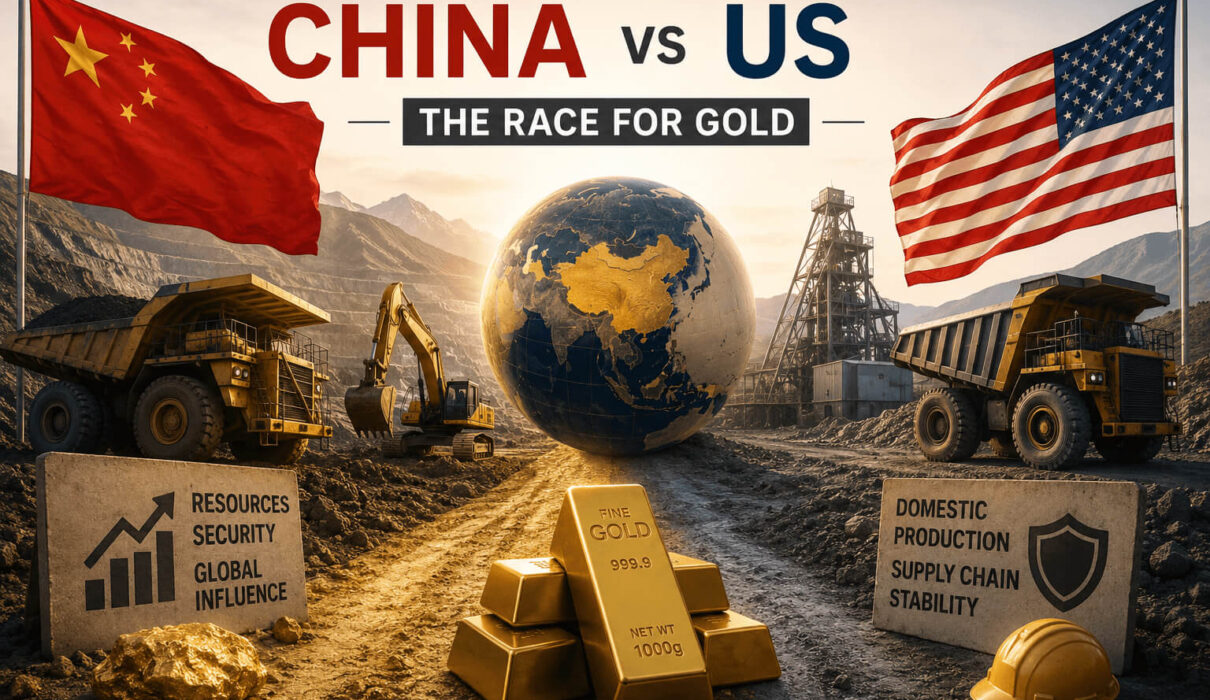
By Gold mining is not just a shiny metal sitting inside bank vaults or hanging around someone’s neck as jewelry. But behind that golden shine, there’s a silent battle happening between the world’s two biggest powers: China and the United States.
This fight is not only about money. It’s about control, influence, economic security, and global power.
Here’s something interesting about human psychology: whenever people feel uncertain about the future, they run toward things that feel “safe.” That’s why gold becomes extremely valuable during economic crises, wars, inflation, or political tension. Countries think the same way humans do. When the world feels unstable, nations start collecting gold like a survival tool. And right now, China and the US are deeply involved in that race.
But there’s one major difference between them.
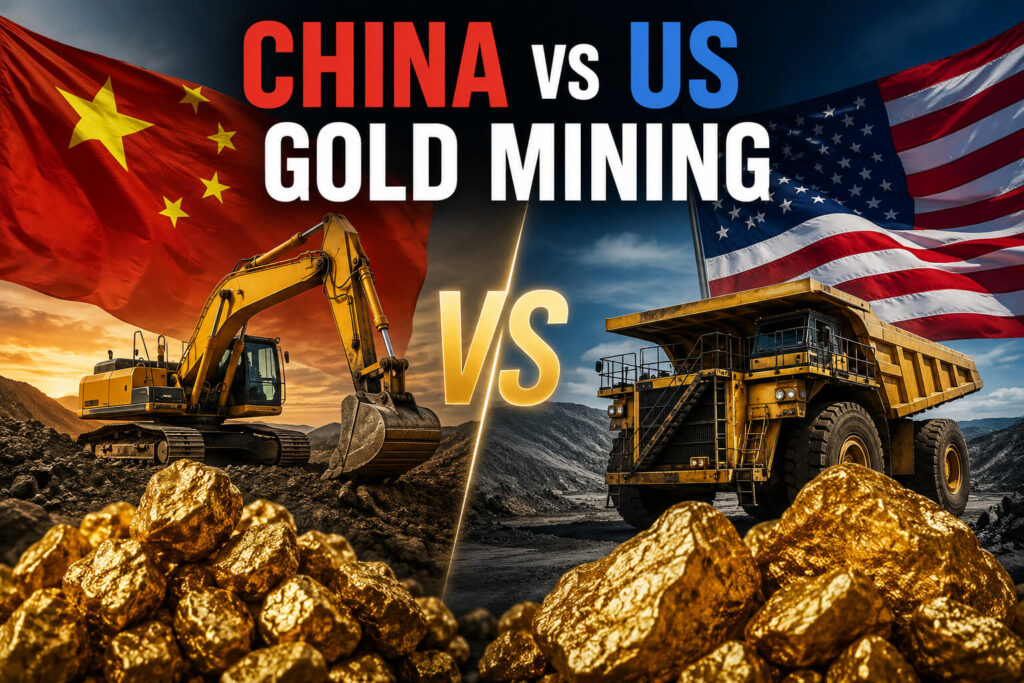
China is aggressively increasing its gold mining and gold reserves, while the US still relies heavily on the strength of the dollar and financial markets. This difference is creating one of the most important economic competitions of modern times.
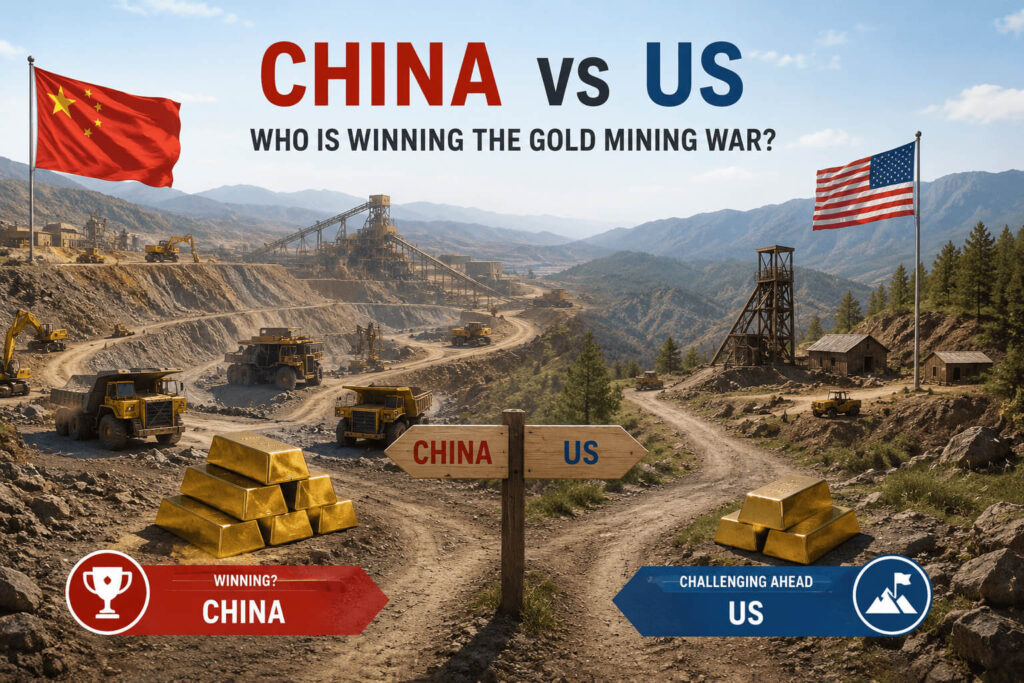
So, who is actually winning the gold mining war?
Why Gold Still Matters in 2026
Some people believe gold is outdated because today’s world runs on digital money, online banking, and cryptocurrencies. But governments don’t think that way.
Gold still matters because it holds value when currencies become unstable. Unlike paper money, gold cannot simply be printed overnight. That makes it powerful during inflation or financial panic.
Central banks around the world continue buying gold because it acts like financial insurance. If a country faces economic pressure, sanctions, or currency weakness, gold becomes a backup shield.
The competition between China and the US is becoming serious.
Both countries understand that whoever controls more gold resources gains long-term economic strength.
Gold Mining Strategy of China
China is currently the world’s largest gold producer. For years, it has been mining huge amounts of gold from its own land while also investing in mines across Africa, Asia, and South America.
But China’s strategy goes much deeper than simple mining.
The Chinese government understands that gold gives nations independence from the US dollar system. That’s one reason China has been increasing its gold reserves steadily over the years.
China also wants to reduce dependence on Western financial systems. If global tensions rise, countries with larger gold reserves may have stronger protection against sanctions or currency pressure.
Another smart move by China is secrecy.
Experts believe China may actually hold much more gold than officially reported. The government does not always reveal full numbers immediately, which creates mystery around its real reserves.
This careful strategy allows China to quietly strengthen its economic position without creating panic in global markets.
Gold Mining Strategy of America
The United States still holds one major advantage: it officially owns one of the world’s largest gold reserves.
A huge portion of America’s gold is stored in famous vaults like Fort Knox. This massive reserve helps support confidence in the US financial system.
However, America’s gold mining growth is not as aggressive as China’s.
The US focuses more on financial dominance through the dollar, stock markets, global banking influence, and technology leadership. In simple words, America’s economic power mostly comes from the financial system itself rather than rapid gold expansion.
Still, gold remains important for the US economy.
American investors usually buy gold during uncertainty, inflation fears, or stock market crashes. Large investment firms and banks also keep strong positions in gold-related assets.
The difference is clear:
- China treats gold as a strategic national weapon.
- America treats gold more like financial security.
That difference changes how both countries approach mining and reserves.
Why China Is Expanding So Aggressively
China’s gold strategy is connected to long-term global goals.
The country wants stronger influence in international trade and finance. To achieve that, China needs protection against possible economic pressure from Western countries.
Gold helps create that protection.
China has also been promoting its currency, the yuan, in global trade deals. More gold reserves can increase trust in the yuan over time.
At the same time, China is buying mining assets worldwide. Chinese companies continue investing in regions rich with natural resources because Beijing understands one simple reality:
Whoever controls resources controls future power.
This includes gold, lithium, rare earth metals, copper, and energy supplies.
Gold is only one part of a much bigger economic strategy.
The Role of the US Dollar
One reason America doesn’t appear desperate for gold is because the US dollar still dominates global trade.
Oil, international payments, global banking, and foreign reserves are heavily connected to the dollar. This gives the United States enormous financial influence worldwide.
As long as the dollar remains dominant, America maintains strong economic control even without expanding gold mining at China’s pace.
But there’s a growing concern.
Some countries are slowly trying to reduce dependence on the dollar. Nations like China and Russia have already increased gold purchases over recent years.
Why?
Because they want alternatives.
If more countries begin trading outside the dollar system, gold could become even more important globally.
That possibility is one reason analysts closely watch China’s gold activity.
Environmental Problems in Gold Mining
Gold mining may sound glamorous, but the reality is often messy.
Mining operations can damage land, pollute water, and create serious environmental issues. Large-scale mining also requires massive energy and expensive infrastructure.
Both China and the US face criticism over environmental impacts connected to mining projects.
China especially has dealt with concerns related to pollution and unsafe mining practices in certain regions. Meanwhile, the US faces strict environmental regulations that sometimes slow mining expansion.
This creates a difficult balance.
Countries want more gold, but citizens also demand environmental protection.
The future of mining may depend on cleaner technologies and more sustainable extraction methods.
Why Investors Are Watching This Battle
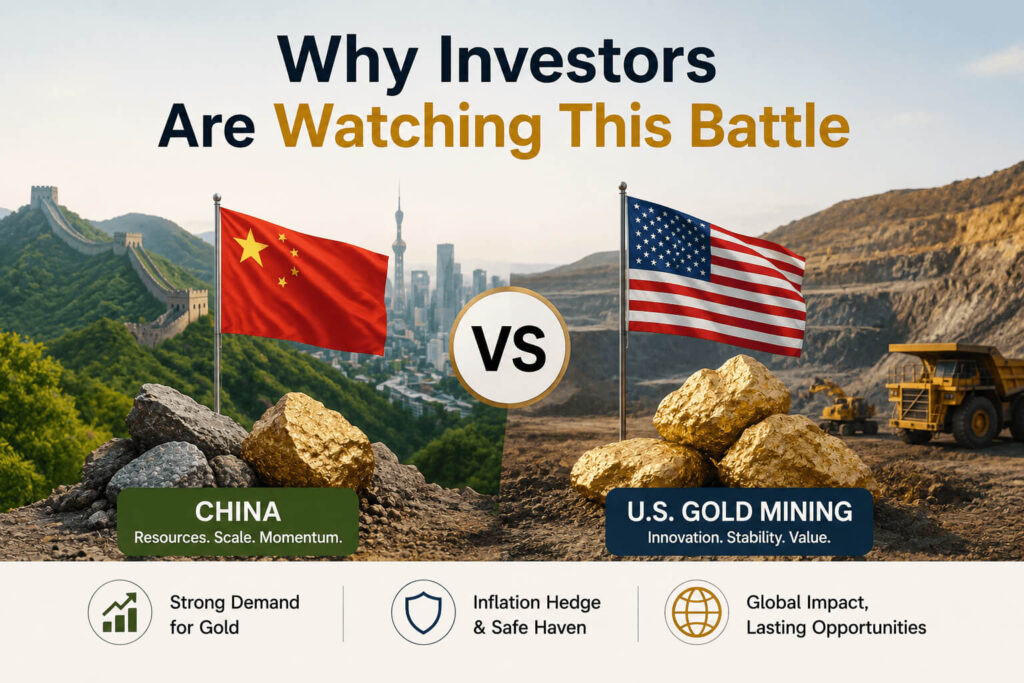
Global investors pay close attention to gold because it often reacts strongly during uncertainty.
When inflation rises, stock markets fall, or geopolitical tensions increase, gold prices usually gain attention.
That’s why many investors watch China and the US carefully.
If China keeps increasing gold reserves aggressively, markets may interpret that as preparation for long-term economic competition. On the other hand, if America strengthens its dollar system further, confidence in US financial dominance could continue.
Both situations influence gold prices worldwide.
This is not just a government issue anymore.
It affects investors, businesses, banks, and even ordinary people saving money for the future.
Could China Overtake the US Financially?
This is one of the biggest questions in global economics.
China’s economy has grown rapidly over the last few decades. The country now plays a major role in manufacturing, technology, exports, infrastructure, and resource investments.
Gold is part of that expansion.
However, overtaking the United States financially is not simple.
America still dominates global finance, technology innovation, military power, and international investment systems. The US dollar also remains the world’s strongest reserve currency.
So while China is becoming more powerful in gold mining and resource control, the US still holds major advantages.
This battle is not ending anytime soon.
In fact, it may continue for decades.
The Psychological Power of Gold
Gold is not only valuable because of economics.
It also has psychological power.
For thousands of years, humans connected gold with safety, status, wealth, and survival. Even today, people emotionally trust gold more than many digital assets or paper currencies.
That emotional trust matters.
When fear enters financial markets, people often return to gold because it feels stable and permanent.
Countries understand this human behavior very well.
That’s why governments continue holding gold even in the modern digital economy.
In many ways, gold is not just a metal.
It’s confidence.
And confidence controls economies = gold controls economics. This is the power of gold
Who Is Really Winning?
The answer depends on how you define “winning.”
If we talk about mining production and aggressive expansion, China clearly has momentum. The country is focused, strategic, and determined to strengthen long-term resource control.
But if we talk about overall financial influence, America still leads through the global dominance of the dollar and international banking systems.
So the real picture is more complicated than headlines suggest.
China is building power through resources.
America maintains power through finance.
And gold sits directly in the middle of that global competition.
My Opinion
China is preparing for a world where resources matter more than promises. America continues relying on the strength of its financial system and global influence. Both strategies are powerful, but both also carry risks.
This story fascinating is that gold continues shaping decisions even in an age of artificial intelligence, digital payments, and modern technology. Thousands of years later, humanity still runs back to gold whenever uncertainty appears.
That says a lot about human nature.
People change.
Technology changes.
Economies change.
But fear, trust, and the desire for security remain exactly the same.
And as long as that psychology exists, the gold war between China and the US will continue.