
 By
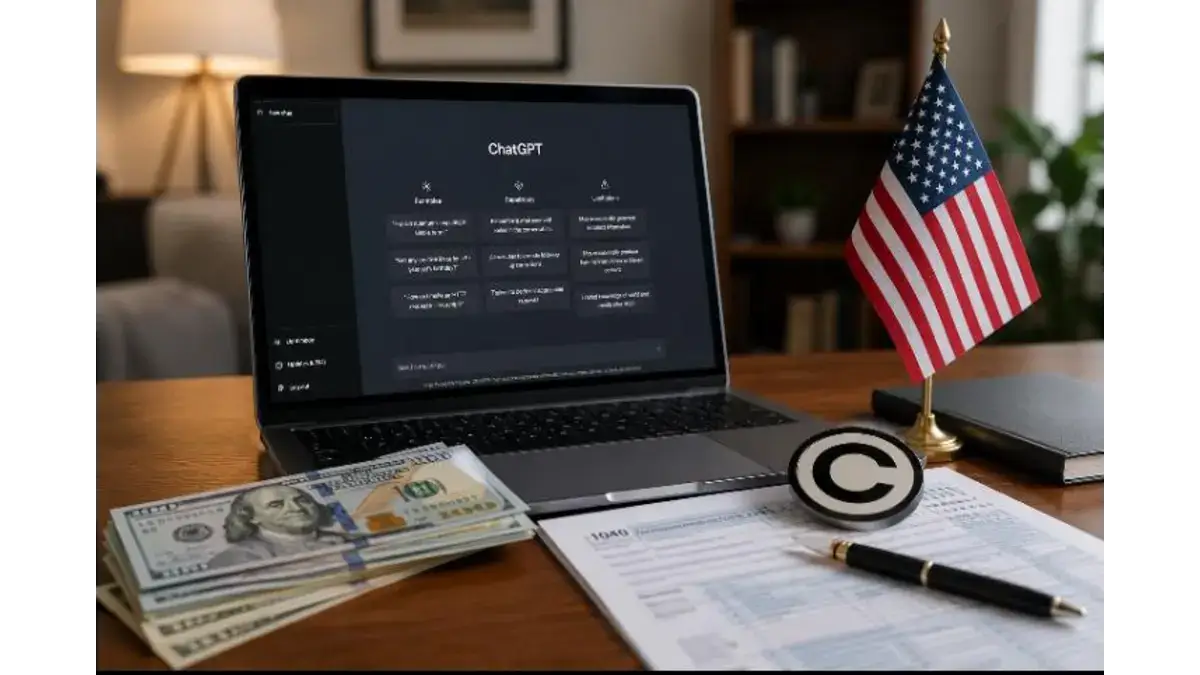
By If you have started using ChatGPT to earn money online, you have probably wondered about something more important than which prompt to use next: is making money with ChatGPT legal in the USA?
Yes, making money with ChatGPT is generally legal in the USA. However, income can be taxable; commercial use and copyright are separate issues, and you remain responsible for following applicable laws, contracts, platform rules, and intellectual property rights.
You can use ChatGPT as a tool for writing, brainstorming, coding, marketing, research, customer communication, digital products, and many other types of work. But making money with AI does not put you outside the normal rules that apply to businesses and freelancers.
What You Need To Know
Taxes still matter. Copyright still matters. Contracts matter. So do platform policies and the rights of other people.
There is also a common misunderstanding around AI content. Being allowed to use an output commercially does not necessarily mean that every word, image, or creative element in that output automatically receives copyright protection.
The U.S. Copyright Office has made that distinction particularly important. Its current guidance says that generative AI output can receive copyright protection when a human author determines sufficient expressive elements, while simply providing prompts is not enough on its own.
So if you’re thinking about turning ChatGPT into a side hustle, freelance service, or full-time business, here’s what you actually need to know.
This article provides general information, not individual legal or tax advice. Your obligations can depend on your business, income, location, contracts, and other circumstances.
Is It Legal to Make Money With ChatGPT in the USA?
Generally, yes.
There is nothing inherently illegal about using an AI tool to help you perform legitimate work and then getting paid for that work.
A freelance writer can use ChatGPT during the research and drafting process. A marketer can use it to develop campaign ideas. A developer can use it as a coding assistant. A business owner can use it to organize information or create a first draft of internal documents.
The important word here is legitimate.
ChatGPT does not turn an illegal activity into a legal one. Using AI to create a scam, impersonate someone, deceive customers, infringe intellectual-property rights, or carry out another unlawful activity can still create legal consequences.
Pro Tip: The tool is not the business. You are still responsible for the business.
OpenAI’s current terms also put responsibility on the user for the content they submit and the way they use generated output. Users are expected to comply with applicable laws and have the necessary rights to provide their inputs.
How People Are Using ChatGPT to Earn Income
People use the technology in very different ways, and the legal or tax questions can change depending on what you actually sell.
| Business activity | How ChatGPT may help | Main consideration |
|---|---|---|
| Freelance writing | Ideas, outlines, editing and drafts | Client requirements and originality |
| Content marketing | Headlines, research assistance and variations | Accuracy and rights |
| Social media services | Captions, content calendars and ideas | Platform rules and brand claims |
| Digital products | Brainstorming and first drafts | Quality and intellectual property |
| Ebooks | Research assistance and editing | Human authorship and copyright |
| Coding services | Explanations, debugging and code suggestions | Licensing and client requirements |
| Business documentation | Drafting and organizing information | Confidentiality and accuracy |
| Creative services | Concept development and revisions | Rights to assets and final work |
Notice that ChatGPT is usually part of the process, not the entire product.
A customer generally isn’t paying because you know how to type a prompt. They’re paying because you solve a problem, save them time, produce something useful, or bring expertise they don’t have. You can also read our parent guide about “Best Free AI Websites To Make Money“
Do You Have to Pay Taxes on ChatGPT Income?
Yes, income earned through a ChatGPT-assisted business can be taxable.
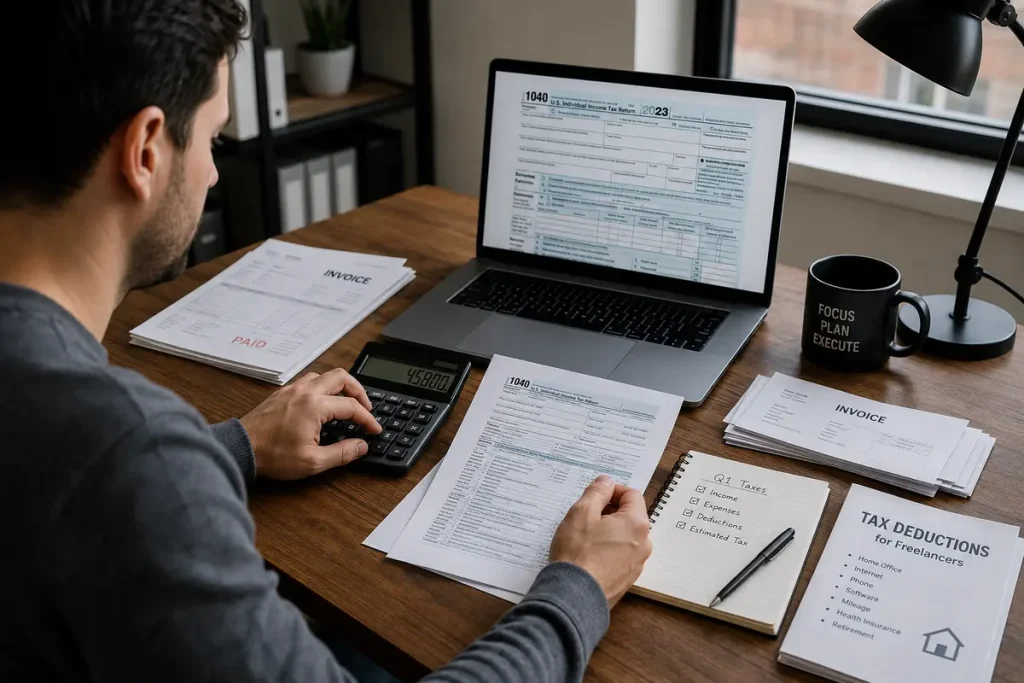
The IRS does not create a special “AI income” category where earnings become tax-free simply because artificial intelligence was involved.
If you’re doing freelance work, selling products, providing services, or earning money through a gig-style activity, normal federal tax rules may apply.
The IRS says gig workers must pay tax on income earned from gig work and generally must file a tax return when they have $400 or more in net self-employment earnings from gig work. That rule can apply even when the work is part-time or temporary.
So imagine you use ChatGPT to help with freelance copywriting and earn $2,000 from clients during the year.
Calling it a “ChatGPT side hustle” doesn’t make that money invisible to the IRS.
Your actual tax bill can depend on your expenses, total income, filing situation, business structure, and other factors.
What About a Small ChatGPT Side Hustle?
The size of the business doesn’t automatically determine whether income matters for tax purposes.
You might make money occasionally from an ebook, freelance project, online service, or digital product. You might make money every week.
One of the easiest mistakes for new online earners is waiting until tax season to figure out where their money came from.
What If You Never Receive a 1099?
You may still have to report the income.
The IRS specifically says gig income can be reportable even if you do not receive a Form 1099-K, 1099-MISC, 1099-NEC, W-2, or another information return.
That’s worth remembering if you receive payments directly from customers or through different online platforms.
A missing tax form does not automatically make income disappear.
When Does This Become Self-Employment?
If you regularly work for yourself and earn money by providing services or selling products, your activity may fall under self-employment rules.
For example, a person who builds a freelance writing business using ChatGPT as a productivity tool may be operating a self-employed business rather than simply using an AI chatbot for personal use.
PRO TIP: Once Your activity becomes a real source of income; don’t treat it like casual pocket money without checking the tax side.
The same could apply to someone selling digital products, running an online service, or performing professional work independently.
The IRS includes creative and professional services among examples of gig work.
Could You Owe Estimated Taxes?
Possibly.
Employees often have taxes withheld from their paychecks. Independent contractors and self-employed workers generally don’t have an employer doing that for them.
That can make an online side business feel deceptively profitable at first.
You receive a payment, the money lands in your account, and it looks like all of it belongs to you.
It may not.
Depending on your circumstances, you may need to make estimated tax payments during the year. The IRS provides specific guidance for people who earn income through self-employment and gig work.
If your AI-assisted business starts producing meaningful income, talking with a tax professional can be worthwhile.
Keep Records of Your Online Business Income
Good records are boring until you need them.
Keep track of payments received, invoices, platform fees, advertising income, software costs, and other business-related transactions.
For example:
| Keep track of | Possible example |
|---|---|
| Client payments | Freelance writing project |
| Product sales | Ebook or template purchase |
| Platform income | Marketplace payment |
| Advertising revenue | Website earnings |
| Software costs | Business-related subscriptions |
| Processing fees | Payment or marketplace fees |
| Marketing expenses | Qualifying advertising costs |
Not every expense is automatically deductible. The tax treatment depends on the expense and your circumstances.
The point is simple: don’t make your accountant reconstruct your entire online business from old emails and bank statements.
Can You Use ChatGPT Commercially?
This is another question that causes confusion.
OpenAI’s current terms say that, to the extent permitted by applicable law, users own the output they receive from the service, while also making clear that output may not be unique.
OpenAI’s business terms similarly state that customers own output, subject to applicable law, and are responsible for their inputs and use of the resulting output.
That means the contractual relationship with the AI provider is one question.
Copyright law is another.
You shouldn’t combine the two and assume:
“OpenAI says I can use it commercially, therefore I automatically own exclusive copyright in everything it generates.”
That’s not how the analysis works.
Can You Sell Content Created With ChatGPT?
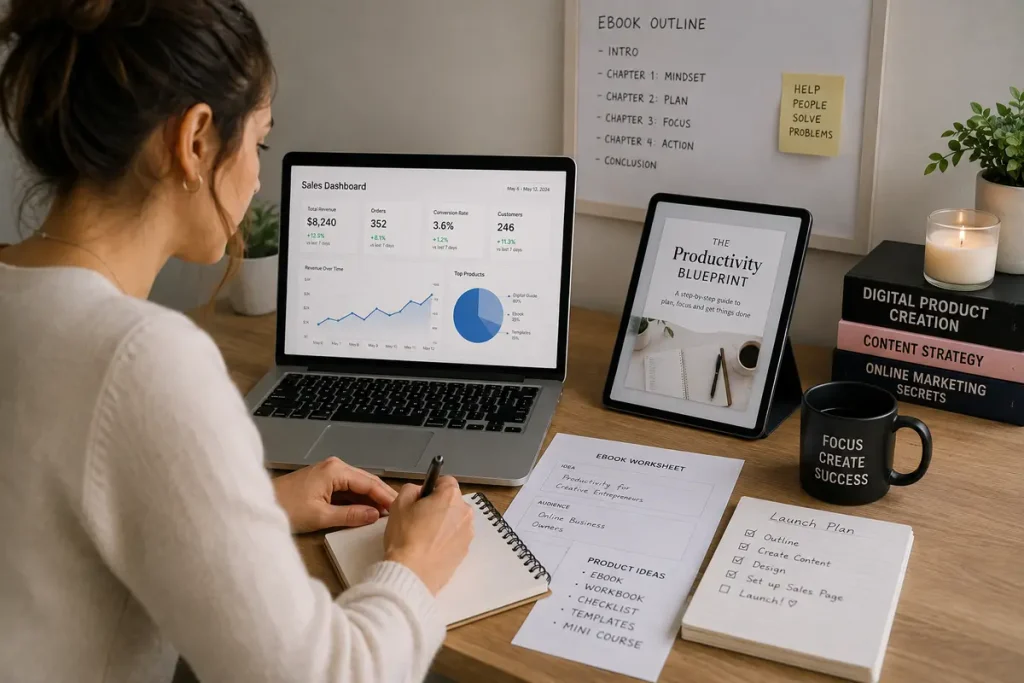
Generally, commercial use can be permitted under OpenAI’s applicable terms, but you still have to consider copyright, other people’s rights, platform policies, and the nature of the content.
You could potentially use ChatGPT while creating:
- blog posts
- marketing material
- ebooks
- educational resources
- social media content
- business templates
- scripts
- software-related work
- other commercial products
But don’t confuse permission to use something with exclusive ownership of every creative element.
That’s especially important if your business model depends on selling supposedly unique intellectual property.
OpenAI also notes that output may not be unique and another user may receive similar content.
Is ChatGPT Content Protected by Copyright?
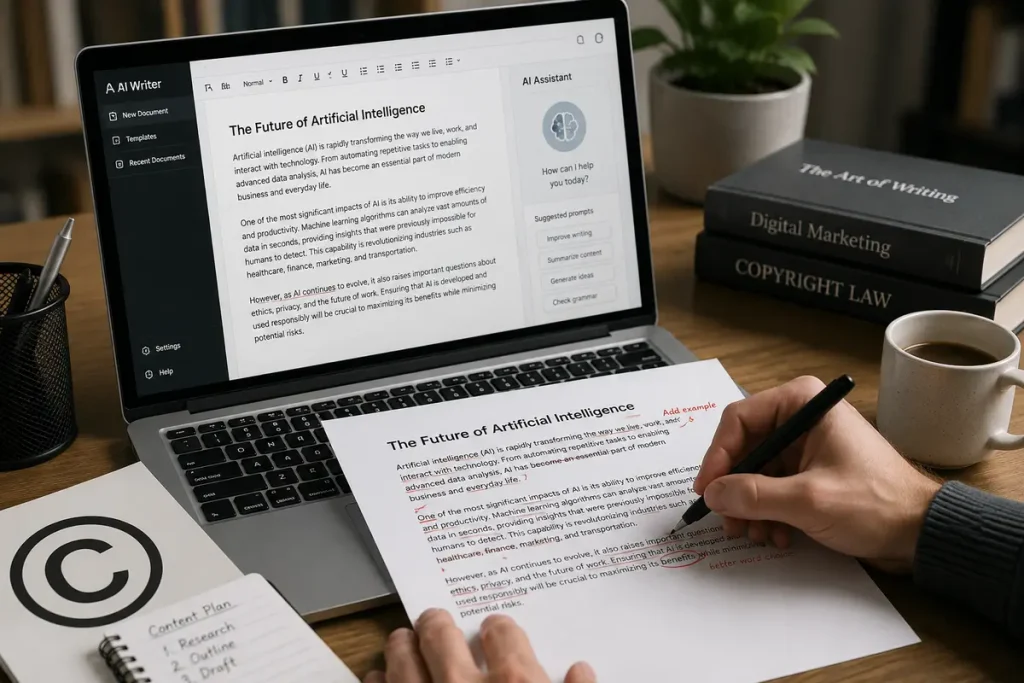
Not automatically.
This is probably the most misunderstood part of the entire topic.
The U.S. Copyright Office’s January 2025 report on generative AI concluded that AI-generated outputs may be copyrightable when a human author has determined sufficient expressive elements. Human-authored material incorporated into an AI output, or creative human selection, arrangement, or modification, can matter. Simply supplying prompts, however, is not enough by itself.
That creates an important difference between AI-assisted creation and purely AI-generated expression.
AI-Assisted Work vs. Raw AI Output
Consider two examples.
In the first, someone asks ChatGPT for a 2,000-word article and publishes the response with almost no meaningful creative changes.
In the second, a writer develops the concept, researches the subject, creates the structure, writes original material, uses AI for brainstorming and editing, changes the wording, adds personal analysis, verifies facts, and makes creative decisions throughout the process.
Those are not identical creative processes.
The Copyright Office’s position focuses on the human contribution to the expressive work. Using AI as a tool does not automatically prevent copyright protection when sufficient human authorship is present.
Does a Detailed Prompt Give You Copyright?
A long prompt isn’t necessarily the same thing as human authorship of the final output.
You can spend ten minutes writing an extremely detailed instruction and still have the AI system determine much of the final expression.
That’s why the Copyright Office concluded that prompts alone generally do not provide sufficient human control over the expressive elements of AI-generated output.
The practical takeaway is not “never use AI.”
It’s to understand what you contributed to the finished work.
What About AI-Generated Images, Videos and Designs?
The same basic question applies, although visual works can raise additional issues.
If you’re selling an AI-assisted design, you should consider where the underlying elements came from, whether you had permission to use them, what the platform’s terms say, and how much human creative work went into the final result.
Don’t assume that pressing a generate button gives you exclusive rights over every visual element.
And don’t assume that something being generated by AI means it is automatically safe to use commercially.
Those are separate questions.
Can ChatGPT Create Copyright Problems?
It can.
AI is not a copyright shield.
If you provide material you don’t have permission to use as input, or if your final product improperly copies protected material, the fact that an AI system was involved does not automatically remove the underlying rights issue.
OpenAI’s terms require users to have the necessary rights and permissions for their inputs and make users responsible for their use of output.
This is particularly important when working with books, paid courses, client documents, proprietary material, photographs, brand assets, or other protected content.
If you don’t have the right to use something, changing the tool doesn’t magically give you that right.
What Should Freelancers Know Before Using ChatGPT?
Freelancers have an additional layer to think about: the client.
Suppose a company hires you to produce ten articles.
The company might not care whether you use AI for brainstorming. Another client might explicitly prohibit AI-generated content. A third could require disclosure.
There is no single answer that covers every contract.
Read the agreement.
You should also be careful with confidential information. A client may give you private business information, customer details, internal documents, or unreleased plans. Don’t assume you’re free to paste everything into an AI system simply because the tool is convenient.
The question isn’t only, “Can ChatGPT do this?”
Ask:
“Am I authorized to use it this way?”
That’s a much better business question.
Do You Have to Tell Customers You Used AI?
Not necessarily in every situation.
There isn’t one universal rule saying every person who uses ChatGPT must announce it to every customer.
But disclosure can become relevant when a client contract, marketplace policy, professional rule, or applicable law requires it.
And there’s a practical reason to be careful.
If you sell a service specifically advertised as entirely human-written and then secretly deliver raw AI output, you may create a trust problem even if the general use of ChatGPT is lawful.
Your marketing claims should match what you’re actually delivering.
When Can Using ChatGPT for Business Become Risky?
The technology itself isn’t usually the dividing line.
The activity is.
Fraud
Using AI to create deceptive schemes, fake documents, or misleading communications can create serious legal consequences.
Impersonation
Using generated content to pretend to be another person can create problems depending on what you’re doing and how it’s used.
Copyright infringement
You can’t use somebody else’s protected work merely because an AI tool helped transform it.
False advertising
AI can generate persuasive marketing copy very quickly. That doesn’t mean the claims inside it are true.
A human still needs to check them.
Confidential information
Private client or company information should be handled according to the relevant agreements, policies, and applicable law.
Regulated professional services
If your business involves legal, medical, financial, or another regulated field, additional requirements may apply. ChatGPT doesn’t replace those obligations.
ChatGPT Ownership Is Not the Same as Copyright Ownership
This distinction deserves its own section because it can save you from a major misunderstanding.
OpenAI’s terms govern the relationship between you and OpenAI.
Copyright law determines whether particular expression receives legal copyright protection.
Those are different systems.
| Question | Short answer |
|---|---|
| Can ChatGPT be used as part of a business? | Generally yes, subject to applicable terms and law |
| Can output be commercially used? | Generally, subject to applicable terms and policies |
| Do OpenAI’s terms address ownership of output? | Yes |
| Is every AI output automatically copyrighted? | No |
| Can human creative work contribute to copyright protection? | Yes |
| Are AI outputs guaranteed to be unique? | No |
OpenAI explicitly warns that output may not be unique, while the Copyright Office focuses on whether sufficient human authorship exists.
That is why a business should avoid promising customers something stronger than the law or the service terms actually support.
Seven Mistakes New AI Earners Should Avoid
1. Assuming AI income is tax-free
It isn’t a special category of money that escapes ordinary tax rules.
2. Waiting for a 1099
You can have reportable income even if a platform or customer doesn’t send you one.
3. Treating every output as copyrighted
Copyright protection depends on human authorship and the specific creative circumstances.
4. Copying protected material
AI assistance doesn’t give you someone else’s intellectual property.
5. Ignoring client contracts
Your client may have rules about AI that go beyond what the general law requires.
6. Publishing unchecked information
AI can make mistakes. If you’re selling information, the responsibility to review it remains with you.
7. Promising customers “exclusive AI copyright”
That’s an unnecessarily risky promise when AI output can be similar across users and copyright protection depends on human authorship.
A Practical Checklist Before You Start Selling
If you’re planning to turn ChatGPT into a source of income, take a few minutes to check the basics.
Know what you’re selling. A service, product, ebook, template, course, or consulting package can create different obligations.
Know where your material comes from. Don’t feed or sell content you don’t have rights to use.
Review the current platform terms. Terms can change, particularly when you’re using third-party marketplaces.
Add real human value. Edit, research, verify, restructure, analyze, and improve the material instead of blindly publishing the first output.
Track your money. Keep invoices, receipts, payment records, and business expenses organized.
Understand taxes. The IRS says gig income is taxable and that self-employment filing requirements can apply at $400 or more in net earnings.
Check contracts. Especially when working for clients.
Review the final product. AI can produce convincing nonsense. Your customer won’t care that a machine made the mistake.
Is Making Money With ChatGPT Worth It?
That depends on how you use it.
If your plan is to generate hundreds of generic articles, ebooks, or social posts and upload them without review, the business may be difficult to sustain.
There is very little defensible value in mass-producing something anyone else can generate in seconds.
The opportunity becomes more interesting when AI helps you do something better, faster, or more efficiently.
A knowledgeable freelancer can use it to speed up research and drafting.
A marketer can generate more ideas and spend more time testing what works.
A small business owner can reduce the amount of time spent on repetitive writing.
A creator can turn rough ideas into finished projects faster.
That’s where the tool becomes useful.
The advantage isn’t simply having access to ChatGPT. Almost everyone can do that.
The advantage is knowing what to do with it.
Frequently Asked Questions
Is making money with ChatGPT legal in the USA?
Generally, yes. Using ChatGPT to support a lawful business or freelance activity is not, by itself, illegal. However, the activity still has to comply with applicable laws, contracts, platform rules, copyright requirements, and other obligations.
Is ChatGPT income taxable?
Income earned through a ChatGPT-assisted business or side hustle can be taxable. The IRS says gig workers must pay tax on gig income and generally must file when net self-employment earnings reach $400 or more.
Can I sell things I create with ChatGPT?
Generally, commercial use may be permitted under OpenAI’s applicable terms. However, commercial use does not automatically mean that every part of the output receives exclusive copyright protection.
Can I copyright something written with ChatGPT?
Potentially, depending on the human contribution. The U.S. Copyright Office says AI-assisted works can be protected when a human author determines sufficient expressive elements. Purely AI-generated material is treated differently.
Does my ChatGPT prompt give me copyright?
Not automatically. The Copyright Office says simply providing prompts is not enough by itself to establish the necessary human authorship in the resulting expressive output.
Do I need a 1099 before reporting my income?
No. The IRS says gig income can be reportable even when you don’t receive an information return.
Should freelancers tell clients they use ChatGPT?
It depends on the contract, client requirements, platform rules, professional standards, and the nature of the work. Don’t assume either “always disclose” or “never disclose” is universally correct.
What is the safest way to earn money with ChatGPT?
Use it as a tool rather than treating it as a substitute for judgment. Add human expertise, check facts, respect intellectual-property rights, follow contracts and platform policies, and keep accurate financial records.
Ending
Once money enters the picture, you need to think beyond the AI tool itself. Your income may be taxable. Your work may involve copyright questions. Your client may have specific requirements. A platform may have its own rules. And you remain responsible for what you publish or sell.
The biggest misconception is that commercial use and copyright are the same thing.
They aren’t.
OpenAI’s terms address your rights and responsibilities in relation to its services, while U.S. copyright law asks whether the work contains sufficient human authorship. The Copyright Office’s current guidance makes clear that AI assistance can coexist with copyright protection, but merely prompting an AI system is not enough on its own.
For taxes, the IRS is equally clear that income from gig work is taxable and that self-employment rules can apply even when the work is only a side hustle.
The smart approach is therefore pretty simple:
Use AI to increase your ability-not to replace your responsibility.
If you bring real skill, original thinking, careful review, and proper business practices to the process, ChatGPT can be a powerful tool for building an online income stream in 2026. If you want to save more & learn more about OpenAI, read our guide on OpenAI Astra Cybersecurity Risk