

 By
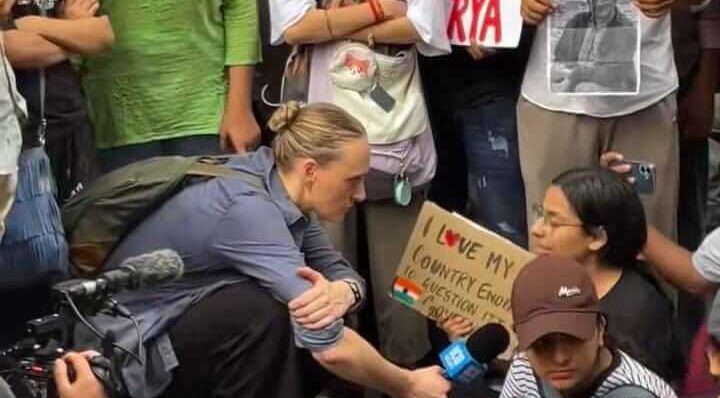
By Students in Delhi have launched protests and demanded the resignation of Union Education Minister Dharmendra Pradhan because of the NEET-UG 2026 paper leak scandal. In July 2026, the initial local protests transformed into a country-wide movement, calling for the government to hold people accountable, rethink the existing Indian system of examinations, and deal with other cases of examination fraud.
The current protests bring the NEET story back on the table as one of the most political and controversial issues of the country. As protests are backed by opposition parties and caused by continuous failures of the examination system, students’ faith in the system is being challenged. The government is ready to conduct reforms but not to fire the minister.
Why students go on strike
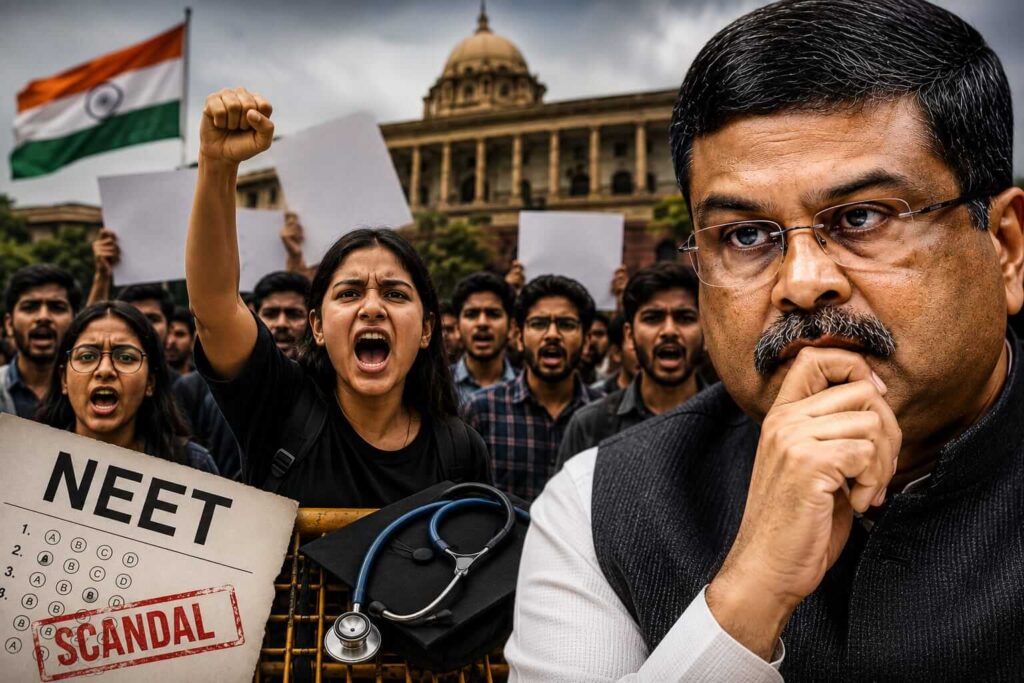
The primary issue, which triggered the protests, is the alleged leakage of the NEET-UG 2026 paper. For years, students of India were disappointed by the situation with examinations in the country, as some of the major entrance exams were constantly questioned.
What was once seen as minor, local protests have developed into nationwide protests. Not only Delhi but Mumbai, Bengaluru, Kolkata, and several capital cities in other states have become the places where students demonstrate.
Why protesters demand the minister’s resignation
In the first place, it should be admitted that the issue under discussion concerns political accountability in case of administrative failure.
As for students’ demands, it is important to note that the series of similar problems with the examinations has already undermined students’ trust in the organizations conducting these entrance exams. In addition to the demand to fire the minister of education, many protesters insist on the reform of the entire examination process in India, the implementation of measures preventing paper leaks, and increased transparency of exams in the future.
Some organizations also emphasize the negative influence of the prolonged crisis on students’ psychology.
Police action and political response
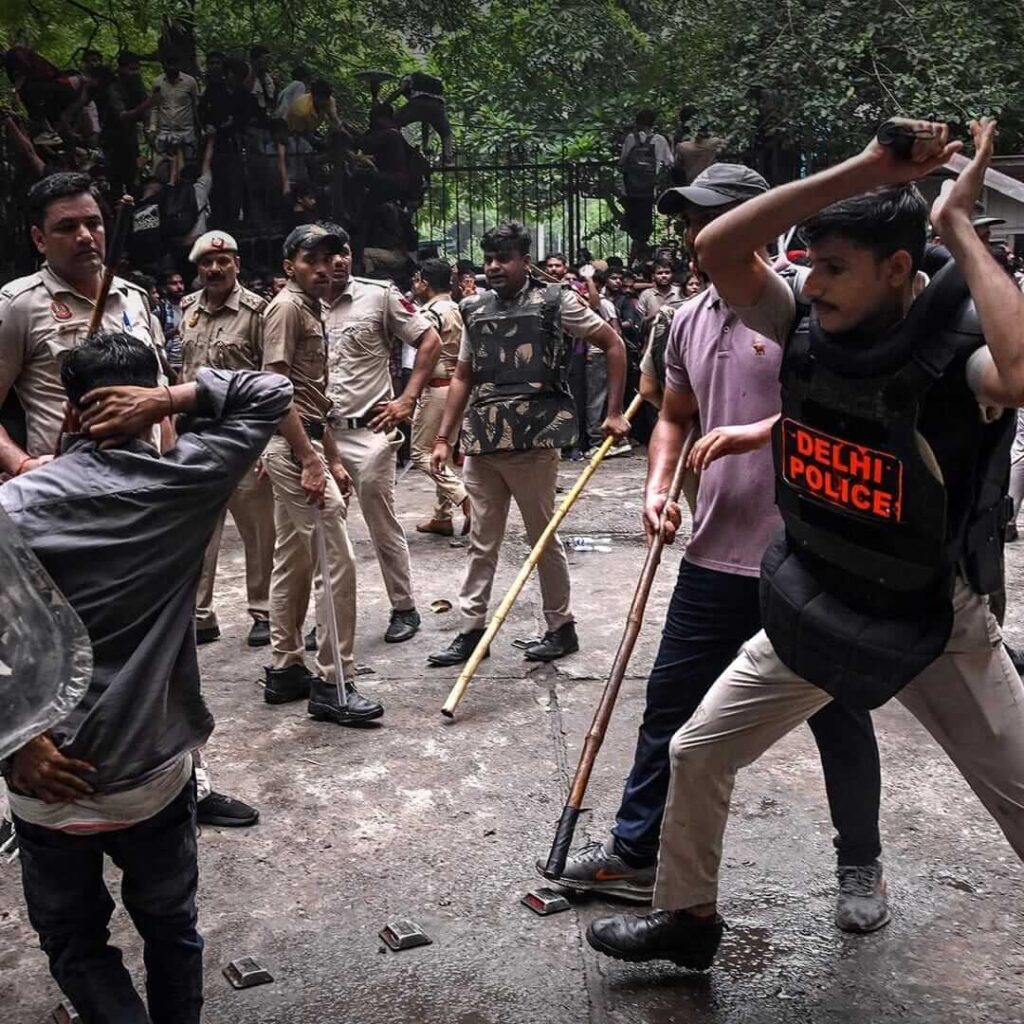
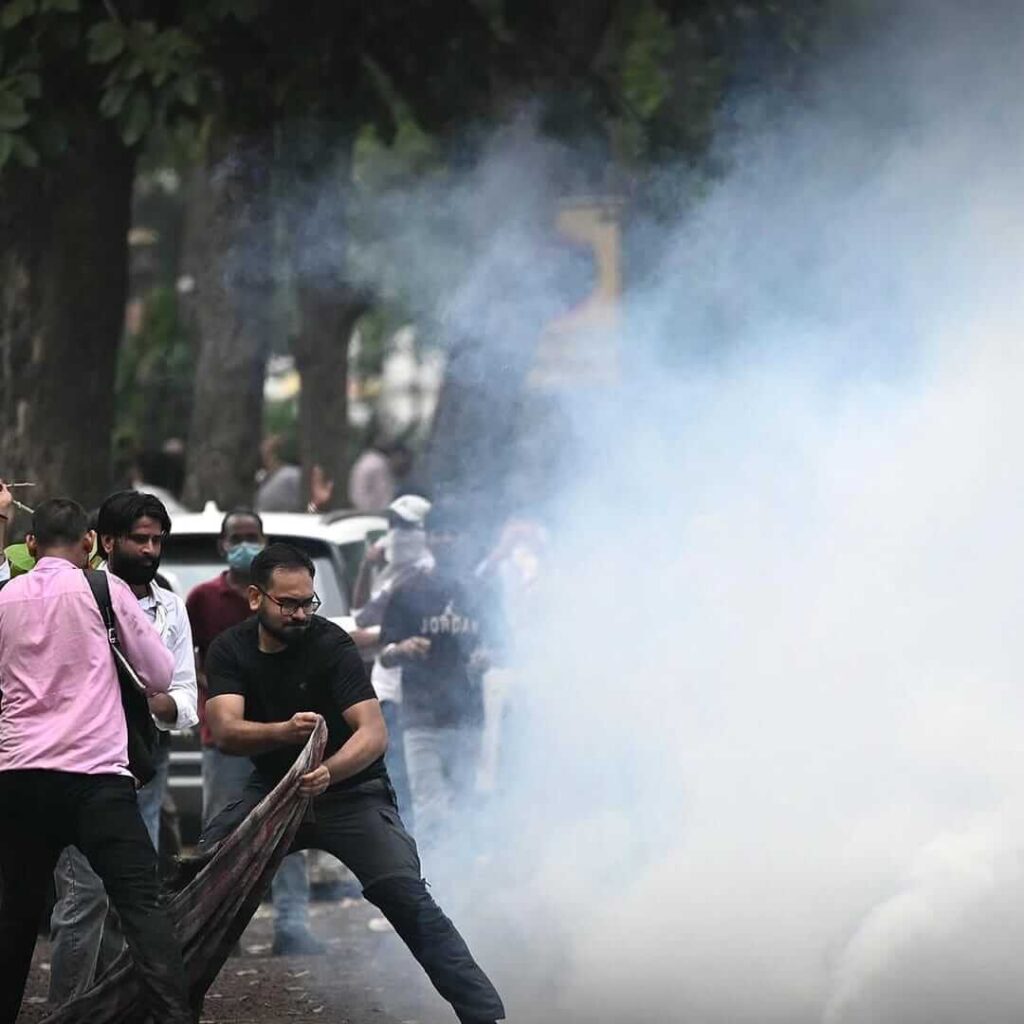
Massive protests in Delhi = massive police presence around sites of protest and government buildings. Clashes have reportedly occurred at some demonstrations, tear gas has been deployed in some locations, and some demonstrators have been arrested. Moreover, the turmoil affected Parliament as proceedings were disrupted by the opposition members who discussed the topic inside and outside Parliament.
Opposition leaders are accusing the government of a lack of support for the students and demand urgent action. In turn, the government insists that the protests are politicized and exaggerate the problem. In particular, the Education Minister Dharmendra Pradhan rejected demands of resignation and accused the opponents of politicizing student fears while saying that talks about the reforms are not off the table.
The discussion of the exam system of India in wider terms
NEET protests are far from being the only concerns regarding India’s examinations. Student unions continue to point to problems in CUET, CBSE exams, recruitment exams, and so forth, arguing that persistent irregularities indicate the weaknesses of the exam system in India.
Experts claim that solving the problem will require more than just commitments. Many students demand thorough reforms that would increase security, transparency, and accountability in preparation for the next exams.
Moreover, all this is connected with growing frustration among young people in India related to the problems with education and employment. With millions of candidates fighting for the limited number of vacancies and jobs in the government sector, any problem with the exam could affect many families, so the credibility of the examination system is crucial.
Thus, all these protests reveal that the current discussion has moved beyond the question of a single exam. For many students, NEET became a test of their trust in the system, which largely defines their education and careers. Restoring this trust will require not only investigation of the problems surrounding NEET but also implementation of the necessary exam reforms in the next few months.