

 By
By Sometimes, it’s as ordinary as sweeping a quiet room, opening an old storage box, or walking into a place that has not been used in a while. In those unnoticed moments, exposure to Hantavirus infection can happen.
but how quickly it can turn from mild, flu-like discomfort into a serious, life-threatening condition. Knowing the dangerous facts and recognizing the symptoms early is not just helpful-it can be life-saving.
What Is Hantavirus?
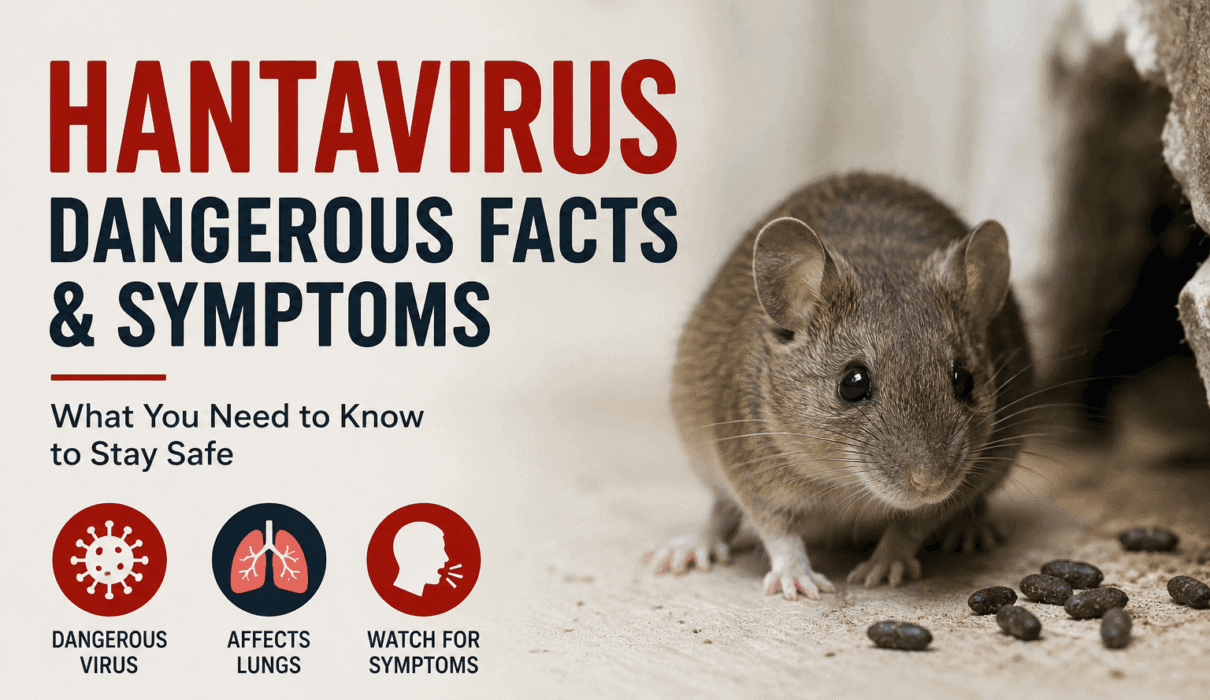
Hantavirus refers to a group of viruses carried mainly by rodents such as mice and rats. These animals don’t usually show signs of illness, but they can shed the virus through their urine, droppings, and saliva. When these materials dry, tiny virus particles can mix with dust and become airborne. If a person inhales this contaminated air, infection can occur.
Different types of hantaviruses exist around the world, and they cause different diseases. The two main conditions linked to hantavirus are:
- Hantavirus Pulmonary Syndrome (HPS) – mostly seen in North and South America, primarily affecting the lungs
- Hemorrhagic Fever with Renal Syndrome (HFRS) – more common in Europe and Asia, affecting the kidneys
Although both conditions are serious, HPS is especially known for its rapid progression and high fatality rate.
Dangerous Facts You Should Know
1. It Often Starts Like a Common Illness
One of the most dangerous aspects of hantavirus is how ordinary it feels at the beginning. The early symptoms can easily be mistaken for the flu or a mild viral infection. This can delay diagnosis and treatment, giving the virus time to progress.
2. Rapid Deterioration
After the initial phase, the condition can worsen very quickly. Within a few days, a person may go from feeling tired and feverish to struggling to breathe. This sudden shift is what makes hantavirus particularly dangerous.
3. High Fatality Rate
In severe cases, especially with Hantavirus Pulmonary Syndrome, the fatality rate can be between 30% and 40%. Even with advanced medical care, the risk remains significant.
4. No Specific Cure
There is no targeted antiviral treatment that completely eliminates hantavirus. Medical care focuses on supporting the body—providing oxygen, managing fluids, and monitoring vital functions. Early hospitalization greatly improves survival chances.
5. Airborne Transmission Risk
Unlike many infections that spread through direct contact, hantavirus can spread through inhalation of contaminated dust. This makes routine activities like cleaning potentially risky if proper precautions are not taken.
6. Rare Human-to-Human Spread
Most hantavirus strains do not spread from person to person. However, a specific type known as Andes virus infection has shown rare cases of human-to-human transmission, mainly in South America.
7. It Exists Worldwide
Hantavirus is not limited to one region. Different strains are found across continents, each associated with specific rodent hosts. This global presence means awareness is important no matter where you live.
Symptoms of Hantavirus
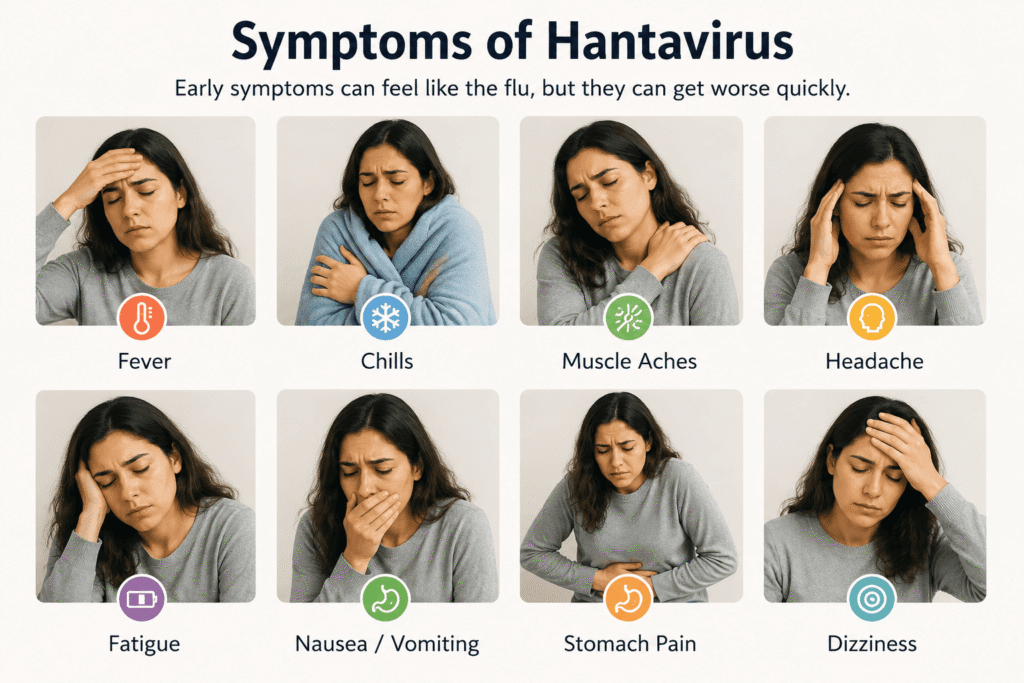
Understanding the symptoms is crucial because early detection can save lives. Symptoms usually appear between one to eight weeks after exposure.
Early Symptoms
The first stage often feels like a typical viral illness:
- Fever and chills
- Fatigue and general weakness
- Muscle aches, especially in the back and thighs
- Headaches
- Dizziness
- Nausea, vomiting, or stomach pain
Because these symptoms are so common, many people ignore them or treat them as a minor illness.
Advanced Symptoms
After a few days, more serious symptoms may develop:
- Shortness of breath
- Persistent coughing
- Chest tightness
- Fluid buildup in the lungs
- Rapid heartbeat
These signs indicate the development of Hantavirus Pulmonary Syndrome, which requires immediate medical attention. At this stage, the condition can become critical very quickly.
How Infection Happens
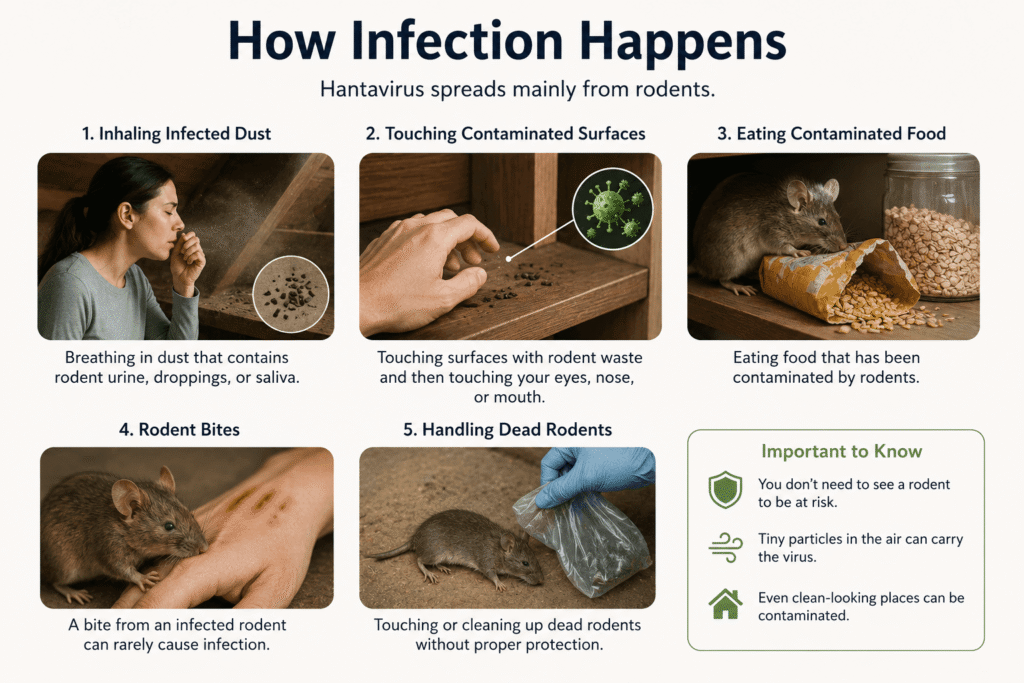
Hantavirus spreads primarily through contact with infected rodents or their waste. Common routes include:
- Inhaling contaminated dust
- Touching surfaces with rodent droppings and then touching your face
- Eating food contaminated by rodents
- Rarely, being bitten by an infected rodent
Even environments that look clean can carry risk if rodents have been present.
Who Is Most at Risk?
While anyone can be exposed, certain groups have a higher risk due to their activities or surroundings:
- People living in rural or rodent-prone areas
- Farmers and agricultural workers
- Construction and cleaning workers
- Campers and hikers
- Individuals handling old buildings or storage spaces
Being aware of your environment and activities can help you take preventive measures.
Prevention: The Most Effective Protection
Since there is no specific cure, prevention becomes essential.
Keep Rodents Away
- Seal holes and cracks in walls and floors
- Store food in sealed containers
- Dispose of garbage properly
Clean Safely
- Avoid sweeping or vacuuming rodent droppings directly
- Spray disinfectant before cleaning
- Use gloves and masks when handling potentially contaminated areas
Improve Ventilation
Before cleaning enclosed spaces, open windows and doors to allow fresh air in. This helps reduce the concentration of airborne particles.
Avoid Direct Contact
Never handle rodents or their droppings without protection. If you find a dead rodent, use proper tools and disinfect the area afterward.
Common Misunderstandings
There are several myths about hantavirus that can lead to confusion:
Myth: It spreads easily between people
Reality: Most types do not spread human-to-human
Myth: Only dirty environments are risky
Reality: Even clean spaces can harbor rodents
Myth: It’s too rare to worry about
Reality: Rare does not mean harmless-its severity makes awareness essential
When to Seek Medical Help
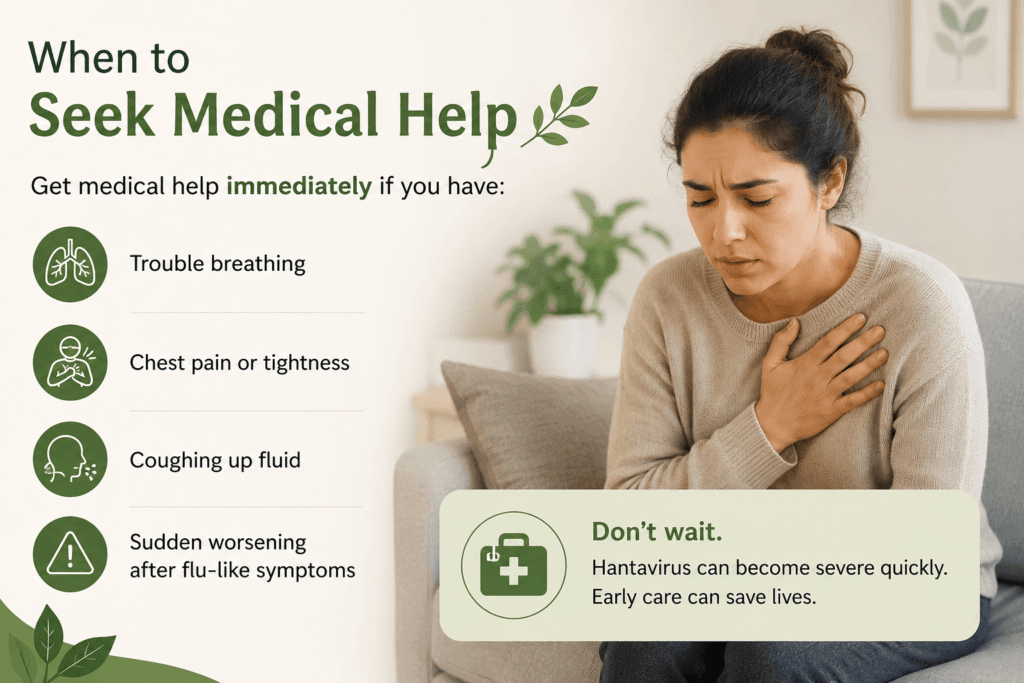
Do not ignore symptoms if you have been in a high-risk environment. Seek medical attention if:
- You develop flu-like symptoms after possible rodent exposure
- Breathing becomes difficult
- Symptoms worsen rapidly
Early diagnosis and supportive care can significantly improve outcomes.
Why Awareness Is Important
Hantavirus may not be widely discussed, but its impact can be severe. Many cases become dangerous because people underestimate early symptoms or are unaware of the risks. Awareness allows you to act quickly, reduce exposure, and protect others.
My Opinion
Hantavirus is not something most people think about in their daily lives, it dangerous. It doesn’t rely on crowded spaces or obvious warning signs. It hides in ordinary places and appears through symptoms.
This virus demands attention, not fear. By understanding how Hantavirus infection spreads, recognizing its early warning signs, and taking practical preventive steps, you give yourself a real advantage. Awareness turns uncertainty into control.
In the end, the difference between risk and safety often comes down to what you know-and what you choose to do with that knowledge.