
 By
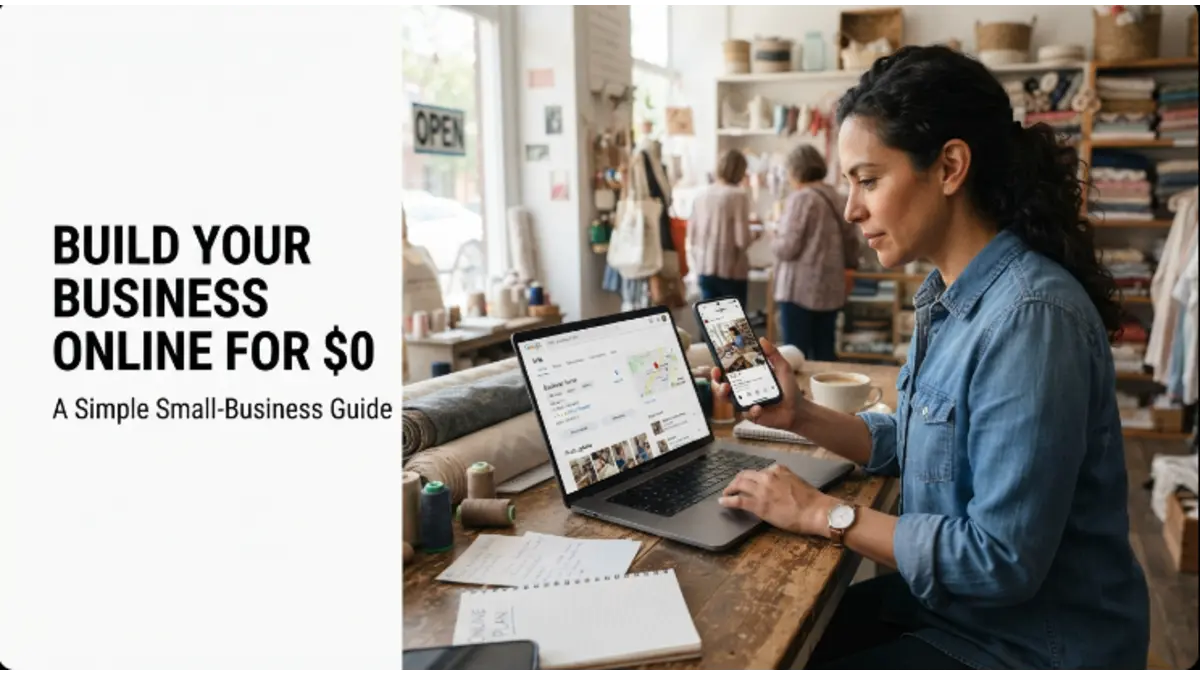
You do not need a big marketing budget to put your small business online.
A website, social media accounts, local listings, customer reviews, and useful content can give people several ways to discover your business without paying for ads. The real challenge is not finding free platforms. It is knowing which ones to set up first and how to use them together.
If you are starting from zero, focus on making your business easy to find, easy to trust, and easy to contact.
Here is a practical way to build an online presence without spending money.
Start With a Free Google Business Profile
If your business serves customers locally, a Google Business Profile should be one of your first priorities.
It can help your business appear in Google Search and Google Maps when people search for businesses like yours.
Complete as much information as possible, including:
- Business name
- Category
- Phone number
- Address or service area
- Opening hours
- Website, if you have one
- Photos
- Products or services
- Business description
Do not treat the profile as something you create once and forget. Add new photos, keep your hours updated, respond to reviews, and make sure your contact information stays accurate.
For a local business, this can become one of the most valuable free pieces of your online presence.
Create a Simple Website
You do not need an expensive website with dozens of pages when you are just starting.
A simple website can answer the questions a potential customer is most likely to have:
What do you sell? Where are you located? How much does it cost? Why should I choose you? How can I contact you?
If you cannot afford hosting yet, you can start with a free website or landing-page option and upgrade later.
At minimum, try to include:
- A clear description of your business
- Your main products or services
- Location or service area
- Phone, email, or contact form
- Business hours
- Customer reviews or testimonials
- Photos of your actual work or products
- A clear call to action
Do not spend weeks trying to make the website perfect. A useful, trustworthy basic website is more valuable than a beautiful website that never gets finished.
Set Up Social Media Profiles That Match Your Business
You do not need to create an account on every social platform.
Choose the platforms where your potential customers are actually spending time.
For example, a local clothing store might benefit from visual platforms where products can be displayed, while a B2B service company may get more value from professional networking platforms.
Whichever platforms you choose, keep your basic information consistent.
Use the same:
- Business name
- Logo or recognizable profile image
- Description
- Phone number
- Website
- Location
A customer should not have to wonder whether two different profiles belong to the same business.
Make Your Business Easy to Find Locally
Having social media accounts does not automatically make your business visible.
Think about the phrases a customer would type into Google.
Someone looking for a shoe store might search for:
“shoe store near me”
Someone looking for a service might search for:
“plumber in Denver”
Your online profiles and website should naturally explain what you do and where you serve customers.
Use relevant location and service information in your business descriptions, website copy, profile information, and content where it makes sense.
Do not stuff the same keyword into every sentence. Write for people first.
Create Useful Content for Promotions
One of the easiest ways to build an online presence for free is to create content around the questions your customers already ask.
A bakery could post:
- How to store fresh bread
- What cake size serves 10 people
- How to choose a birthday cake
- Behind-the-scenes baking videos
A real estate agent could create:
- Home-buying tips
- Neighborhood guides
- Common first-time buyer mistakes
- Simple explanations of mortgage terms
A shoe store could create:
- How to choose running shoes
- How to clean leather shoes
- Shoe sizing tips
- Work shoes for people who stand all day
The goal is not to promote your business in every post.
Give people something useful first. Your business becomes part of the solution.
Use Short Videos to Reach New People
You do not need expensive cameras or professional equipment.
A smartphone can be enough to start creating short videos.
Show things that are naturally interesting about your business:
- A product demonstration
- Before-and-after work
- A quick tip
- A common customer question
- Behind-the-scenes work
- A new product
- How something is made
- A mistake customers should avoid
Keep the videos simple.
A 20-second useful video that answers one customer question can be more valuable than a heavily edited promotional video that says nothing specific.
You can also reuse the same video across multiple platforms rather than creating completely different content for each one.
Ask Happy Customers for Reviews
Reviews can help potential customers feel more comfortable choosing a business they have never used before.
After a successful purchase or service, ask the customer if they would be willing to leave an honest review.
Keep the request simple.
You do not need to offer rewards or pressure customers to leave positive reviews. The important thing is to make it easy for satisfied customers to share their genuine experience.
Also respond to reviews professionally, including negative ones.
A thoughtful response can show future customers that you pay attention when something goes wrong.
Get Listed on Free Business Directories
Depending on your industry and location, there may be free directories where you can create a business listing.
Look for reputable directories relevant to your:
- Industry
- City
- Region
- Professional association
- Local community
Make sure your business information is accurate and consistent.
You do not need hundreds of low-quality directory listings. A smaller number of legitimate, relevant listings can be more useful than creating profiles everywhere.
Use Local Communities
Your customers may already be gathering online.
Look for legitimate local communities, neighborhood groups, community forums, and industry-specific groups where business participation is allowed.
Do not join a group and immediately post advertisements every day.
Instead, answer questions, share useful information, and participate naturally.
For example, a local home-repair business could answer a homeowner’s question about a common maintenance problem without immediately pushing its services.
People who find the answer useful can check the business profile themselves.
Turn Existing Customers Into Online Advocates
You already have something many new businesses are trying to build: customers who know your business.
Make it easy for them to interact with you online.
You could encourage customers to:
- Follow your social profile
- Leave an honest review
- Tag your business when appropriate
- Share useful posts
- Send your website to someone who needs your service
Do not assume that customers will do this automatically.
If you provide a genuinely good experience, a simple request can give satisfied customers an opportunity to help spread the word.
Show the Real Business Behind the Brand
Small businesses have an advantage that large companies sometimes struggle to create: personality.
Show people what actually happens behind the business.
Introduce the owner. Show your workspace. Explain how you choose products. Share a mistake you learned from. Show the people doing the work.
This does not mean turning every social post into a personal story.
It simply gives potential customers more reasons to trust that there are real people behind the business.
Do Not Try to Be Everywhere
One of the biggest mistakes a new business can make is creating ten social profiles and then abandoning most of them.
You are better off maintaining a few useful channels consistently.
A simple setup might look like this:
| Channel | Main purpose |
|---|---|
| Google Business Profile | Local discovery |
| Website | Information and conversions |
| One or two social platforms | Reach and engagement |
| Business directories | Additional visibility |
| Customer reviews | Trust |
Once these are working, you can expand.
Track What Brings People to Your Business
Free marketing only helps if it eventually contributes to real business results.
Pay attention to questions such as:
- How did you hear about us?
- Did you find us through Google?
- Which social post brought you a message?
- Which service page gets the most attention?
- Which videos generate inquiries?
- Are people calling after finding your business online?
You do not need complicated analytics when you are starting.
Even keeping a simple spreadsheet of inquiries and where they came from can reveal which activities deserve more of your time.
A Simple 30-Day $0 Online Presence Plan
If you are starting with nothing, do not try to build everything in one weekend.
Week 1: Build the foundation
Set up or improve your Google Business Profile, create your basic website or landing page, and make sure your contact information is correct everywhere.
Add real photos and clearly explain what your business offers.
Week 2: Build your social presence
Choose one or two social platforms that make sense for your customers.
Create complete profiles and publish several useful posts or short videos.
Do not worry about going viral. Focus on answering real customer questions.
Week 3: Build trust
Ask satisfied customers for honest reviews.
Create useful content based on common questions. Join relevant local or industry communities and participate without constantly promoting your business.
Week 4: Review the results
Look at what people actually interacted with.
Which posts received attention? Which pages were visited? Did anyone call, message, request a quote, or visit your store after finding you online?
Use those observations to decide what to create next.
Common Mistakes to Avoid
Building an online presence for free is possible, but there are a few traps worth avoiding.
Creating profiles you never maintain: An abandoned profile can make a business look inactive.
Posting only advertisements: People have little reason to follow a business that constantly asks them to buy.
Using inconsistent information: Different phone numbers, addresses, or business names across profiles can create confusion.
Buying fake reviews or followers: Numbers are not a substitute for trust.
Waiting for everything to be perfect: Your first website and social posts do not need to be perfect. They need to be useful and accurate.
Trying every marketing channel at once: Spreading your time across too many platforms usually makes consistency harder.
FAQs
Can I build an online presence without a website?
Yes. You can begin with a Google Business Profile, social media profiles, business directories, and customer reviews. However, a simple website can give customers one central place to learn about your business.
How can I promote my small business online for free?
Start with free local listings, useful social media content, customer reviews, local communities, and a basic website or landing page. Focus on channels where your potential customers are already searching or spending time.
How long does it take to build an online presence?
You can create the basic foundation within a few days, but building visibility and trust takes longer. Consistent activity over several weeks and months is more useful than creating everything once and abandoning it.
Should a small business be on every social media platform?
No. Choose the platforms that fit your customers and your type of content. A small business with a strong presence on one or two relevant platforms can be better positioned than one with inactive profiles everywhere.
Reminder
You do not need thousands of dollars to start building an online presence.
You need accurate information, useful content, genuine customer feedback, and consistency.
Start with the places where customers are already looking. Build a complete Google presence, create a simple website, choose a couple of social platforms, answer customer questions, collect honest reviews, and pay attention to what actually generates inquiries. Read this related guide: Small Business Growth Tips