
 By
By Increasing retail sales is rarely about finding one magical promotion or simply bringing more people through the door. A store can have strong foot traffic and still struggle if shoppers do not find what they need, cannot decide what to buy, or leave without a reason to return.
The better approach is to look at the entire sales journey. How are people discovering the store? What happens when they walk in? Which products attract attention? How well do employees help shoppers make decisions? Are customers buying one item when they could genuinely benefit from two? And what happens after the first purchase? If your business about grocery store, read our this guide: How to Increase Retail Sales in Small Town Grocery Store
What you need to learn
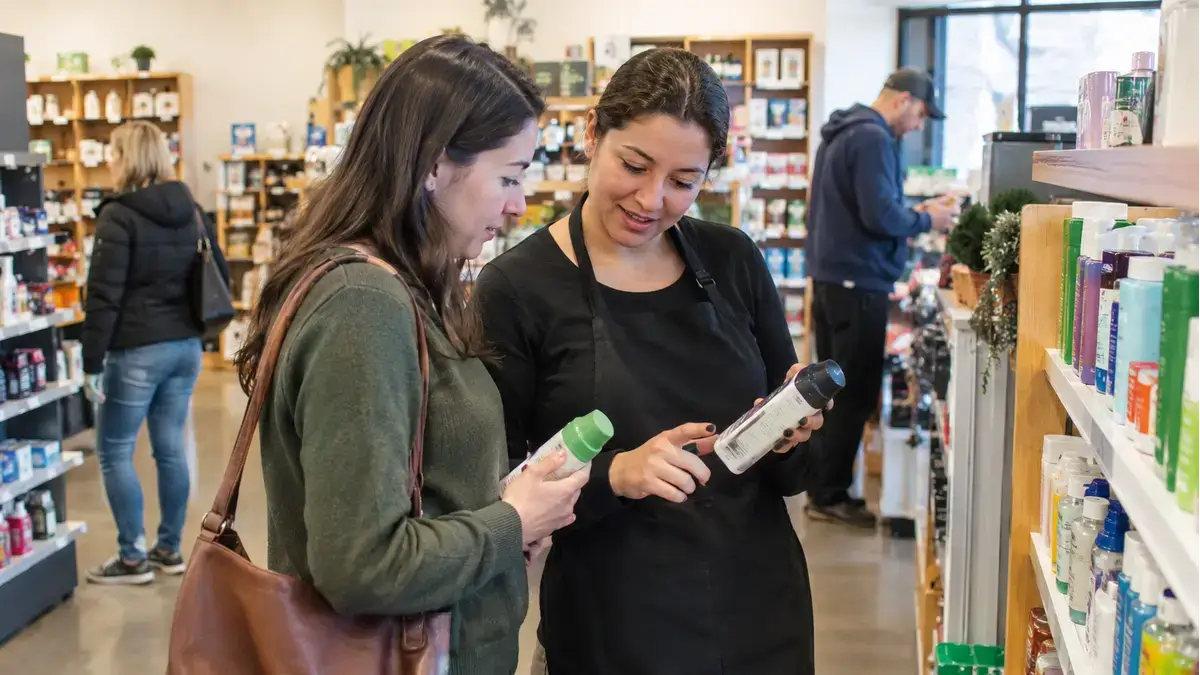
For retailers, these questions matter across almost every category, from clothing and beauty stores to electronics, grocery, home improvement, furniture, and specialty shops. Modern shoppers may discover a product through Google or social media, visit a store to see it in person, and then decide whether to buy online, pick it up locally, or purchase it at the register. Current retail guidance increasingly treats those experiences as connected rather than separate.
So, if you are wondering how to increase sales in retail, start by finding the part of the customer journey that is holding the business back. Then improve that part instead of changing everything at once.
If you are also working on the broader side of business growth, our guide to Small Business Growth Tips covers strategies beyond retail sales.
Before You Change Anything, Find the Sales Problem
One of the easiest mistakes for a store owner to make is assuming that low sales automatically mean low traffic.
That is not always true.
Traffic × Conversion × Average Transaction Value
Traffic tells you how many potential customers are arriving. Conversion tells you how many of those shoppers actually purchase. Average transaction value tells you what the typical customer spends.
Imagine a neighborhood clothing store that gets 500 visitors during a busy weekend. If only 8% purchase, the store has a conversion problem. Spending more money on advertising may bring another 100 people into the store, but it does not fix why existing shoppers are walking away.
Now consider another retailer where 40% of shoppers purchase, but most transactions are only $20. That business may have a stronger opportunity in cross-selling, bundles, product selection, or appropriate upgrades.
A simple diagnostic view can help:
| What you’re seeing | Investigate first |
|---|---|
| Not enough people visiting | Local visibility, marketing, partnerships |
| Plenty of visitors but few purchases | Layout, merchandising, staff, pricing, trust |
| Good conversion but small receipts | Cross-selling, bundles, upselling |
| Strong first purchases but few returns | Loyalty, follow-up, customer experience |
| Customers ask for products you don’t have | Inventory and demand forecasting |
| Online and store experiences feel disconnected | Omnichannel systems and communication |
POS reports can make this diagnosis much more precise. Look at sales by product, category, day, hour, and location. Notice which products sell together and which ones repeatedly sit untouched. Retail data can also reveal peak traffic periods and inventory patterns that are difficult to spot by simply watching the sales floor.
Once the real bottleneck becomes clear, the right strategy becomes much easier to choose.
16 Tricks To Increase Sales for Store
Retail sales are influenced by several moving parts:
1. Make the Store Easy to Shop
A customer should not have to solve a puzzle before making a purchase.
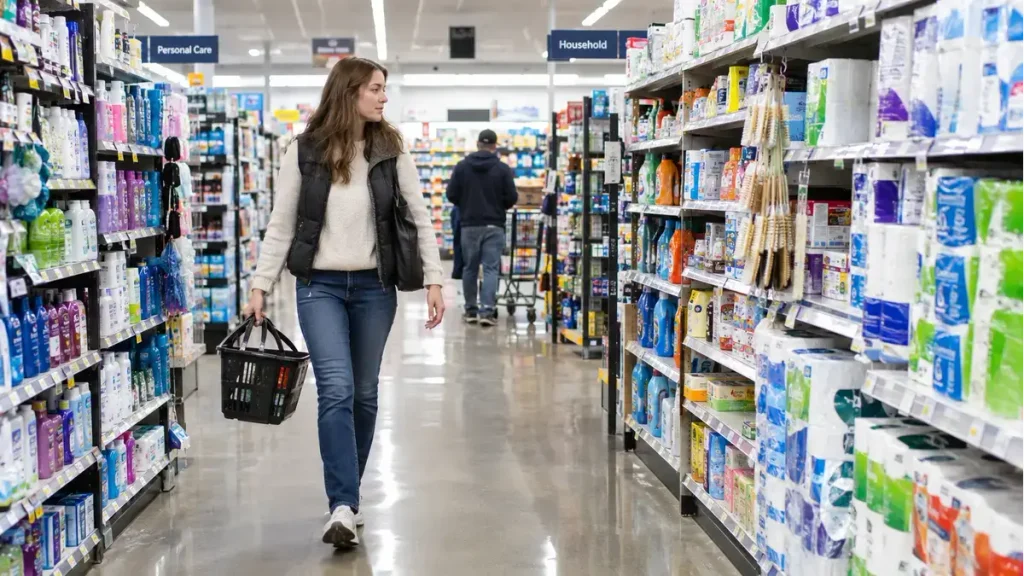
When shoppers enter a store, they quickly form an impression of the space. They notice whether the aisles are comfortable, whether products are easy to find, whether prices are visible, and whether the store feels organized.
That does not mean every store needs an expensive redesign.
Sometimes the biggest improvement comes from removing friction.
A clothing retailer might separate workwear, casual clothing, and seasonal merchandise in a way that feels intuitive. A home improvement store could organize products around common projects instead of forcing customers to search through unrelated aisles. A beauty store might group complementary products so shoppers can understand the routine rather than seeing dozens of individual products competing for attention.
The goal is simple: help customers understand what to buy and where to find it.
Walk through the store as if you have never visited before. What catches your eye? Where would you go if you wanted your most popular product? Can you find the checkout easily? Are there areas where merchandise feels crowded or forgotten?
Good store design is not decoration for its own sake. It is part of the selling process.
2. Put Your Best Products Where Shoppers Notice Them
Not every product deserves exactly the same amount of attention.
Best sellers, seasonal products, new arrivals, high-demand items, and strategically important merchandise should have strong visibility. If a product is profitable and customers already want it, hiding it behind weaker merchandise makes little sense.
This is where a store’s entrance and other high-visibility areas become valuable.
A retailer might feature:
- New seasonal products near the entrance
- Popular products at eye level
- Complementary products beside their primary item
- Limited seasonal collections in prominent displays
- High-interest products in window displays
But visibility should match the customer’s reason for visiting.
A grocery store may use an entrance display for seasonal foods. A sporting-goods retailer might highlight equipment associated with the current season. A clothing store could build a complete outfit instead of displaying individual garments separately.
The customer should be able to look at the display and immediately understand the idea behind it.
Visual merchandising is widely used to guide attention, organize shopping flow, and create focal points inside retail environments.
3. Use Visual Merchandising as a Silent Salesperson
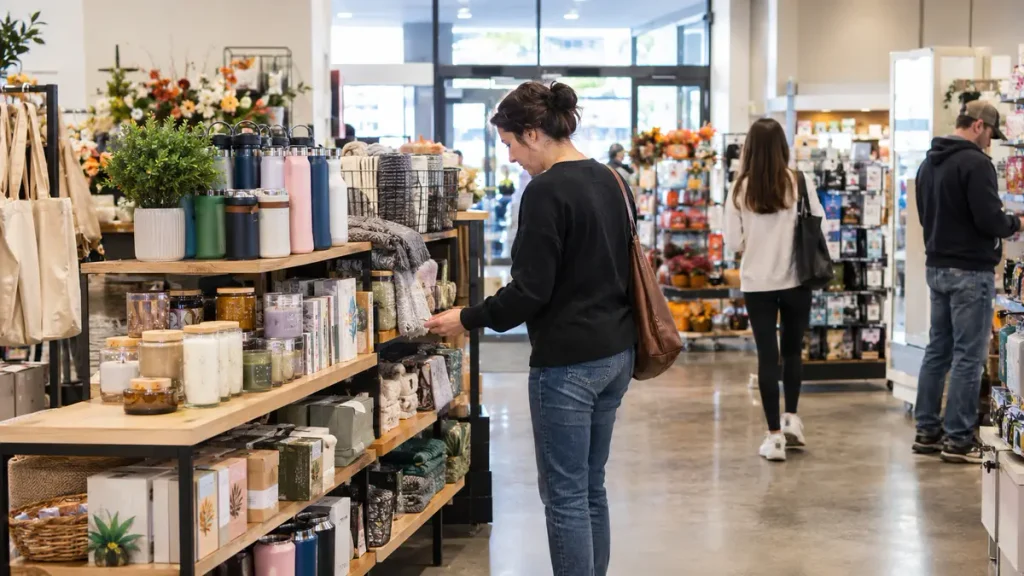
Good merchandising answers questions before an employee has to answer them.
Consider a furniture store displaying a dining table by itself. The shopper sees the table and has to imagine the rest.
Now place the table with matching chairs, lighting, tableware, and a simple room setting. The customer can suddenly visualize how the purchase fits into their own home.
A shoe store can display running shoes beside socks and accessories. A hardware store can organize products around a weekend painting project. A beauty retailer can place cleanser, moisturizer, and sunscreen together as part of a simple skincare routine. The display does not need to scream for attention. It needs to make the buying decision easier.
Pro TIip: Keep displays understandable, refresh them when seasons or promotions change, and avoid putting so many products together that none of them becomes the focal point.
4. Train Employees to Help Customers Buy
Retail employees have a difficult job.
A customer who wants help may not know exactly what they need. Another shopper may want to browse without being interrupted. The difference between useful assistance and aggressive selling can determine whether someone completes the purchase or walks out.
Instead of training employees to immediately ask, “Can I help you find something?”, teach them to understand the customer’s situation.
For example, imagine someone looking at running shoes.
A weak sales conversation might be: These are our newest shoes. They’re $140.
A better conversation begins with questions:
“Are you using them mostly for running, walking, or both?”
Then:
“How many miles do you usually run?”
Those answers give the employee something meaningful to work with.
Now the recommendation is based on the customer’s needs rather than simply pushing the most expensive product.
Staff training can also cover product knowledge, handling objections, explaining differences between products, recognizing when a customer wants space, and suggesting complementary items without becoming pushy.
The strongest sales conversation often feels less like selling and more like helping someone make a decision.
5. Improve Conversion Instead of Chasing More Traffic
More visitors are useful only when the store is capable of converting them into buyers.
Retail conversion is essentially the percentage of visitors who complete a purchase. The same principle applies online, where conversion is calculated from completed actions relative to visitor sessions.
If conversion is weak, examine the experience before increasing advertising spend.
Look for friction such as:
- Confusing product information
- Unclear pricing
- Difficult-to-find sizes or variations
- Long checkout lines
- Poor product presentation
- Staff who are unavailable when needed
- Lack of trust or reviews
- Products that do not appear to match the customer’s needs
A useful test is to watch where shoppers hesitate.
Do they pick up an item and put it back?
Do they repeatedly compare two products?
Do they ask the same question to multiple employees?
Do they reach the checkout and then abandon the purchase?
Those moments contain clues.
Sometimes the fastest way to increase sales is not to get another customer into the store. It is to help the customer already standing there finish the purchase.
6. Use Cross-Selling to Increase the Value of Each Purchase
Cross-selling works best when the additional product makes the original purchase more useful.
A customer buying a laptop may need a case.
Someone purchasing a new camera may need a memory card.
A customer buying a dress may also need shoes or accessories.
The mistake is recommending unrelated products simply because the retailer wants a bigger transaction.
A better question for employees is:
“What else would make this purchase more useful?”
That distinction matters. Cross-selling should solve a customer need, not create another sales obstacle.
7. Upsell When the More Expensive Option Actually Adds Value
Upselling is different from cross-selling.
Cross-selling adds another product. Upselling encourages a customer to choose a better version of the product they are already considering.
The higher-priced option should have a clear benefit.
For example, a customer choosing between two office chairs might prefer the more expensive model because it has better lumbar support and a longer warranty. A shopper buying luggage may choose a larger, more durable model because they travel frequently.
But pushing the premium option on every customer can damage trust.
The right question is not:
“How can we sell the most expensive item?”
It is:
“Is there a better option for what this customer actually needs?”
When the answer is yes, explain the difference clearly. Let the customer decide.
8. Build Product Bundles Around Real Shopping Needs
Bundles can make shopping easier while increasing the amount a customer buys.
The best bundles feel logical rather than manufactured.
| Retail category | Possible bundle | Customer benefit |
|---|---|---|
| Coffee | Coffee maker + filters + coffee | Everything needed to start |
| Fitness | Yoga mat + blocks + strap | Complete basic setup |
| Beauty | Cleanser + moisturizer + sunscreen | Simple skincare routine |
| Home improvement | Paint + brushes + roller | Convenient project kit |
| Pet supplies | Food + treats + toy | Convenient recurring purchase |
A bundle also gives retailers an opportunity to move complementary or slower-selling products without relying on a blanket discount across the entire store.
The key is relevance.
If customers can immediately understand why the products belong together, the bundle feels helpful.
If the retailer simply throws unrelated products into a package and labels it a “special deal,” shoppers may see it as a clearance tactic.
9. Strengthen Local Discovery to Bring in More Nearby Customers
For a physical store, online discovery is part of local foot traffic.
Someone searching Google for a nearby gift shop, shoe store, beauty supply store, furniture store, or hardware retailer may already have strong purchase intent.
That makes local visibility particularly valuable.
Start with the basics:
- Keep your Google Business Profile accurate.
- Maintain correct store hours, especially around holidays.
- Add recent photos of the storefront and interior.
- Make products, services, and categories easy to understand.
- Respond professionally to customer reviews.
- Make sure your website clearly shows the store location and contact details.
- Create useful local content rather than stuffing city names onto pages.
Local marketing can also extend beyond search. Partnerships with nearby businesses, community events, seasonal promotions, and neighborhood campaigns can put a store in front of people who already live or work nearby.
The objective is not simply “more website traffic.”
It is more qualified local shoppers who have a reason to visit.
10. Treat Customer Reviews as Part of the Sales Process
Reviews are not just something customers read after they discover your store.
They can influence whether someone decides to visit in the first place.
A retailer with dozens of recent, thoughtful reviews may feel safer to a new customer than a similar business with little visible feedback.
But asking for reviews should not become a desperate numbers game.
The better approach is to create an experience worth talking about, then make it easy for satisfied customers to leave honest feedback.
Negative reviews can also provide useful information.
If several customers mention the same problem, confusing returns, slow checkout, poor signage, unavailable sizes, or employees who are difficult to find, the review section has become an informal customer-research tool.
Responding politely matters, but fixing the repeated problem matters more.
11. Connect Your Online Store With Your Physical Store
Today’s retail customer does not necessarily follow a straight path from advertisement to checkout.
A shopper might see a product on social media, search for it on Google, visit the retailer’s website, check whether the item is available locally, visit the store, and finally purchase it at the register.
Another customer may buy online and pick up the order in-store.
Another may purchase in-store and later reorder online.
That is why omnichannel retail is more than simply having both a website and a physical location. The channels need to work together. Modern omnichannel systems can connect inventory, orders, customer information, fulfillment, and returns across touchpoints.
| Disconnected experience | Connected experience |
|---|---|
| Website does not show store inventory | Customers can check availability |
| Online and store prices conflict unexpectedly | Pricing and promotions are coordinated |
| Online purchase cannot be returned locally | Clear cross-channel returns |
| Loyalty points work only in one place | Rewards work across channels |
| Customer has to explain previous interaction | Staff can access relevant customer information |
For smaller retailers, this does not necessarily require building an expensive mobile app.
Even simple improvements, accurate inventory information, online ordering, pickup options, consistent product information, and clear return policies can remove friction.
12. Use POS Data to Understand What Customers Actually Buy
A point-of-sale system contains far more information than the amount of money collected at checkout.
It can help answer questions such as:
Which products sell together?
Which days are strongest?
What time does the store become busiest?
Which products are slowing down?
What is the average transaction value?
Which promotions produce transactions without producing enough margin?
Which products repeatedly sell out?
This turns sales data into a decision-making tool.
For example, suppose a retailer notices that one category sells particularly well between 5 p.m. and 7 p.m. on weekdays. That information could influence staffing, product placement, promotions, and inventory availability during those hours.
Or suppose a store discovers that customers who buy one particular product frequently purchase another item within the same transaction. That relationship can inform merchandising and bundles.
Data should not replace what employees observe on the floor. It should help explain it.
13. Fix Inventory Problems Before Spending More on Marketing
There is little value in successfully advertising a product that customers cannot buy.
Stockouts can turn purchase intent into disappointment. Overstock creates a different problem: cash is tied up in products that are not moving and valuable selling space becomes occupied by merchandise customers are ignoring.
Look at inventory through the lens of sales:
| Warning sign | What it may indicate | Possible response |
|---|---|---|
| Best seller repeatedly sells out | Demand underestimated | Adjust reorder points |
| Product sits for months | Weak demand or poor visibility | Reposition, bundle, or reduce carefully |
| Seasonal product arrives late | Poor planning | Review seasonal purchasing |
| Customers frequently ask for unavailable items | Assortment gap | Investigate demand |
| Too much stock in one category | Product mix problem | Shift purchasing toward stronger demand |
Historical sales, seasonality, and real-time customer behavior can help retailers improve purchasing decisions and reduce both stockouts and unnecessary inventory.
Sometimes the answer to falling sales is not another promotion.
It is simply having the right product on the shelf when customers want it.
14. Give Existing Customers a Reason to Return
A retail business does not have to find a completely new customer for every sale.
Existing customers already know the store. They have experienced the products, service, checkout process, and overall experience. If that experience was positive, the next purchase may require considerably less convincing. You can also read this related guide: How to Turn First Time Customers Into Repeat Customers
A loyalty program might reward customers for purchases, provide early access to new products, offer birthday benefits, or create members-only events. It does not have to be complicated.
The important thing is that customers understand the benefit.
Retention also happens outside formal loyalty programs.
A customer who bought a coffee maker may eventually need filters. Someone who purchased seasonal clothing may return when the next collection arrives. A pet owner may repeatedly need food and supplies.
Useful follow-up can remind customers that the store is there without turning every interaction into another discount offer.
Current retail guidance increasingly emphasizes retention, post-purchase engagement, loyalty, and reducing friction as ways to encourage repeat purchases.
The goal is not to communicate more.
It is to communicate more relevantly.
15. Do Not Make Discounts Your Entire Sales Strategy
Discounts can create urgency, but permanent discounting can create a difficult habit.
If shoppers learn that a store always has another 20%-off promotion coming next week, some may simply wait.
That can put pressure on margins while training customers to value the discount more than the product.
Before reducing prices, look for other ways to increase perceived value:
Better product presentation.
Better service.
Useful bundles.
Exclusive products.
Loyalty benefits.
Convenient pickup.
Expert assistance.
Better packaging.
Faster checkout.
A stronger shopping experience can support sales without turning every transaction into a price competition.
Strategic promotions still have their place, particularly for seasonal merchandise, excess inventory, or specific periods when demand is weak. The important distinction is between using promotions as a tool and depending on promotions as the business model.
16. Measure What Works-Then Keep Improving
Retail sales strategies should be judged by results, not by how impressive they look.
A new display may look fantastic and sell almost nothing.
A small change in product placement may quietly increase sales.
A promotion might produce more transactions while reducing gross margin.
A loyalty program may attract sign-ups without increasing repeat purchases.
Measurement exposes those differences.
Which Retail Sales Strategy Should You Start With?
The right starting point depends on the problem.
| If your store has… | Start with… |
|---|---|
| Very little foot traffic | Local discovery and marketing |
| Strong traffic but weak sales | Store experience and conversion |
| Good conversion but small receipts | Cross-selling, bundles, upselling |
| Strong sales but frequent stockouts | Inventory management |
| Lots of one-time buyers | Loyalty and retention |
| Good physical sales but weak online sales | Omnichannel improvements |
| Plenty of data but little insight | POS analysis |
| Strong products that customers overlook | Merchandising and product placement |
This is important because retailers often solve the wrong problem.
If customers are already walking into the store, another advertising campaign may not be the best investment.
If customers are buying but spending very little, getting more visitors may not produce the biggest improvement.
And if shoppers repeatedly ask for a product that is unavailable, the marketing department may not be the problem at all.
Find the bottleneck first.
A Practical 30-Day Plan to Increase Retail Sales
You do not need to implement all 16 strategies this week.
A more realistic approach is to spend the first month identifying the biggest opportunity and testing a few changes.
| Week | Main focus | What to do |
|---|---|---|
| Week 1 | Diagnose | Review sales, traffic, conversion, average transaction value, inventory, and customer feedback |
| Week 2 | Improve the store | Fix layout, product visibility, signage, displays, and obvious buying friction |
| Week 3 | Increase transaction value | Test relevant cross-sells, bundles, and carefully chosen upsells |
| Week 4 | Retention + measurement | Improve loyalty/follow-up and compare results against the first week |
Keep the process simple.
If the average transaction value rises after introducing relevant bundles, investigate why. If a new display increases sales of one product but reduces sales of another, look at the overall category rather than celebrating one number.
Retail improvement is a continuous process, not a one-time makeover. If you want motivation, read: How Much Does a Laundromat Make in the USA
Frequently Asked Questions About Increasing Retail Sales
What is the fastest way to increase retail sales?
There is no single fastest strategy for every store. The quickest improvement often comes from fixing the biggest existing bottleneck. A store with weak conversion may benefit from improving its shopping experience, while a store with strong conversion but small transactions may benefit more from bundles and cross-selling.
How can I increase sales in a retail store without lowering prices?
Focus on product visibility, customer service, merchandising, bundles, relevant upselling, local discovery, convenience, loyalty, and a smoother buying experience. These approaches can increase value without making blanket discounts the primary sales tool.
How do I get more customers into a retail store?
Improve local search visibility, keep your Google Business Profile accurate, collect genuine customer reviews, use social media to showcase products and events, build relationships with nearby businesses, and give people a specific reason to visit.
How can employees increase retail sales?
Employees can increase sales by understanding customer needs, explaining product differences, answering questions confidently, recommending useful complementary products, and making the buying process easier. Good sales training should focus on helping customers rather than pressuring them.
Should every retail store have a loyalty program?
Not necessarily. A loyalty program works best when it gives customers a clear reason to return and is simple enough to understand. A complicated program with rewards customers rarely use may add more friction than value.
How important is online marketing for a physical retail store?
It can be very important because customers often research products, locations, reviews, hours, and availability online before visiting a physical store. The online and offline experiences should therefore support each other rather than operate as completely separate businesses.
How to increase retail sales fast?
It depends on the change. A better display or checkout process may produce an observable difference relatively quickly, while loyalty, local search, customer retention, and broader merchandising changes can take longer. The important thing is to establish a baseline and measure the specific change rather than relying on impressions.
Ending
Learning how to increase sales in retail is less about collecting dozens of tricks and more about understanding how a shopper moves from discovery to purchase and eventually back to the store again.
Sometimes the answer is outside the store: better local visibility, stronger reviews, or a more useful online presence. Sometimes it is inside: clearer merchandising, better employee conversations, easier navigation, or products placed where customers can actually see them.
And sometimes the opportunity is already sitting inside the business data.
The strongest retailers pay attention to all of these signals. They know when they need more customers, when they need better conversion, when they need to increase transaction value, and when the real opportunity is getting existing customers to return.
That mindset changes the question from “What promotion should we run next?” to something far more useful:
“Where are we losing the sale, and what can we change to make the next purchase easier?”
That is where sustainable retail sales growth begins.